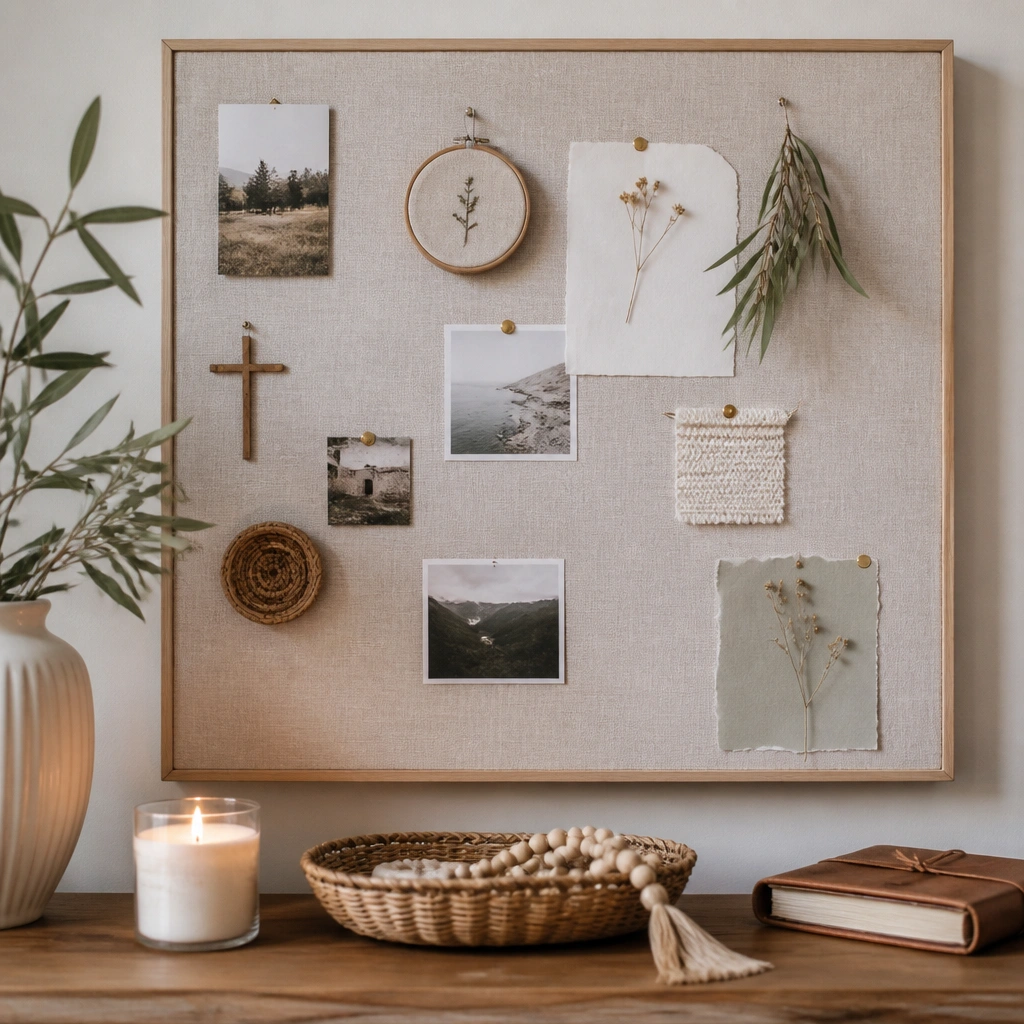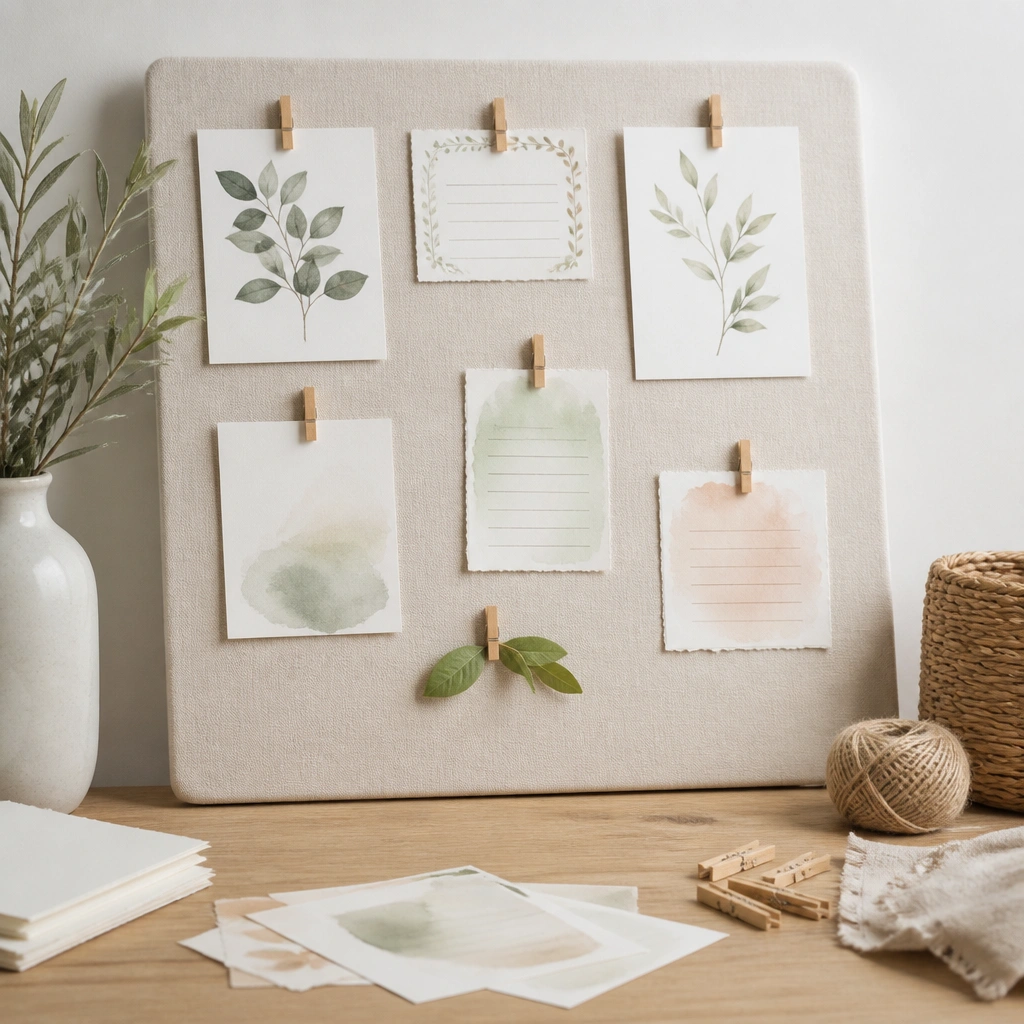





1. Budget Pine Frame Prayer Board with Printable Cards
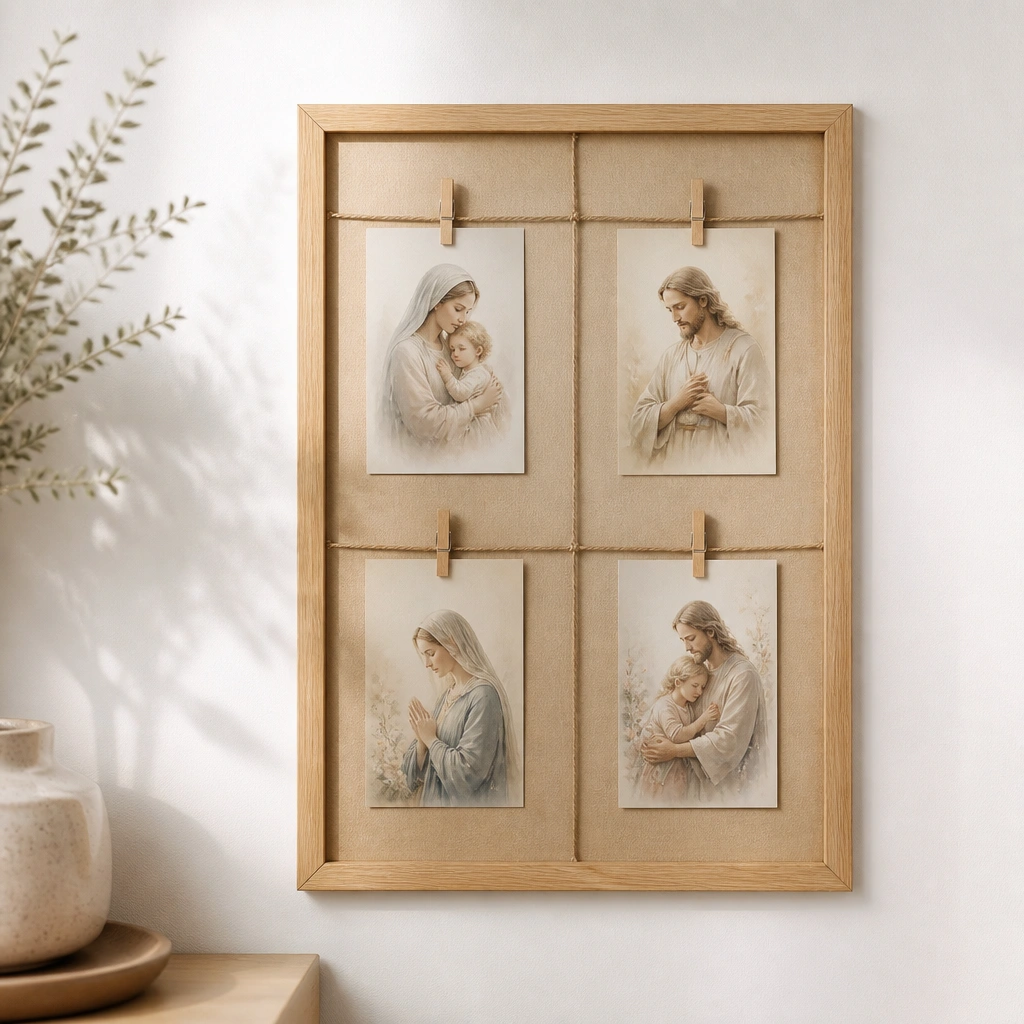
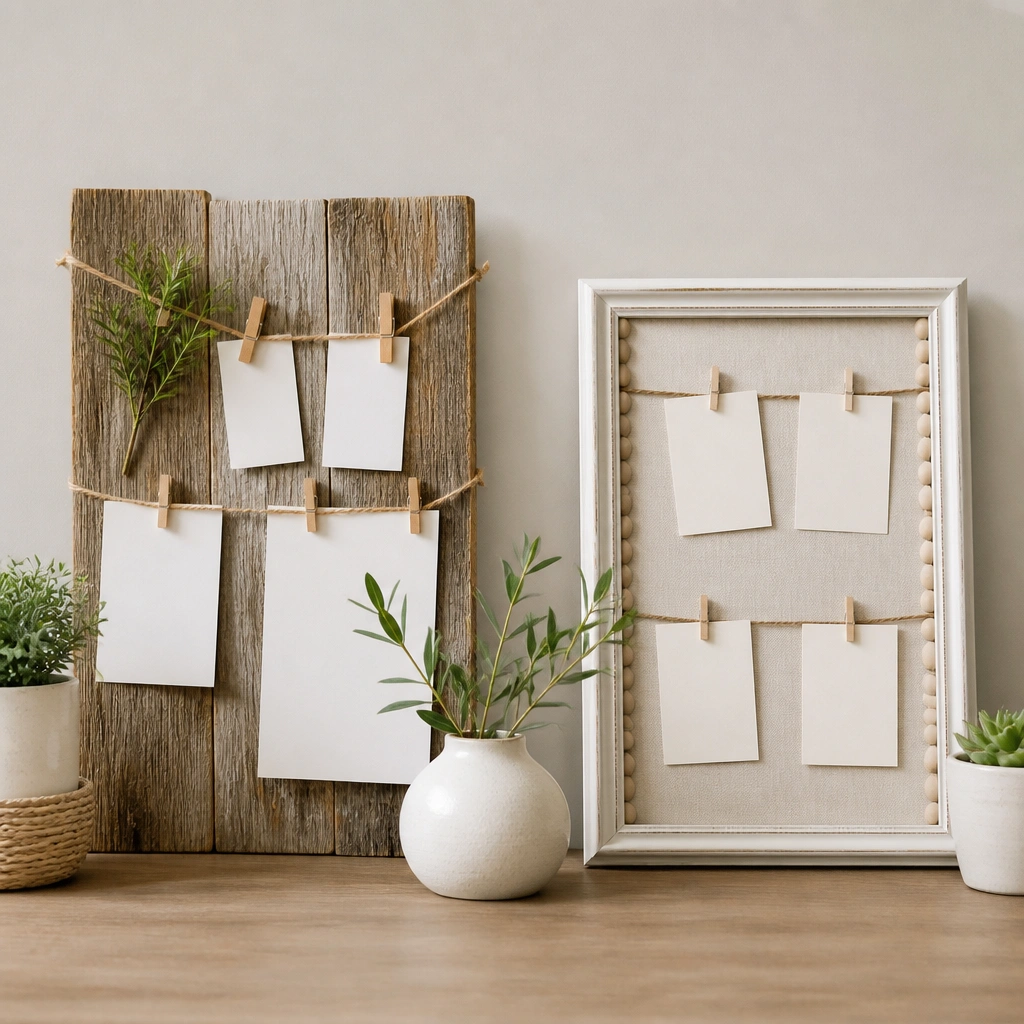
This look is cozy and structured without costing much. Use a thrifted frame or a wood craft frame, then back it with scrapbook paper in warm neutrals. Add a simple twine grid and clothespins so kids can swap cards without ripping tape.
Good to knowPrint your prayers on thicker cardstock (100-120 lb) and laminate just the card backs so the clothespins grip better.
2. Foam Board Pocket Prayer Board (Velcro Swaps)
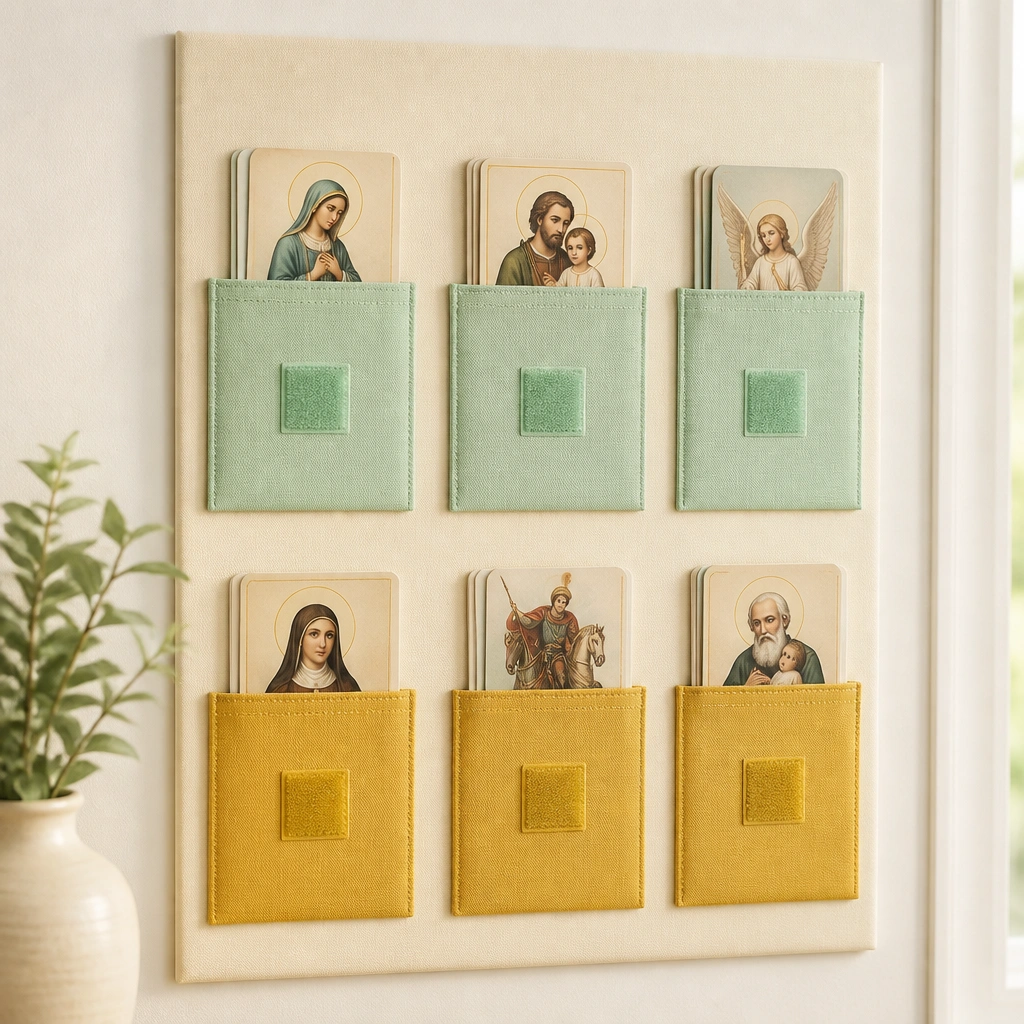
Foam board is lightweight, cheap, and perfect for kid routines because it won’t warp. Fabric pockets (or felt) keep cards from curling, and Velcro makes swapping fast and mess-free. Choose two to three pocket sizes so cards stay uniform.
Stick to 2 pocket sizes — one for “daily prayers” and one for “special prayers” — to reduce card clutter.
3. Magnetic Sheet Prayer Board for Easy Rearranging
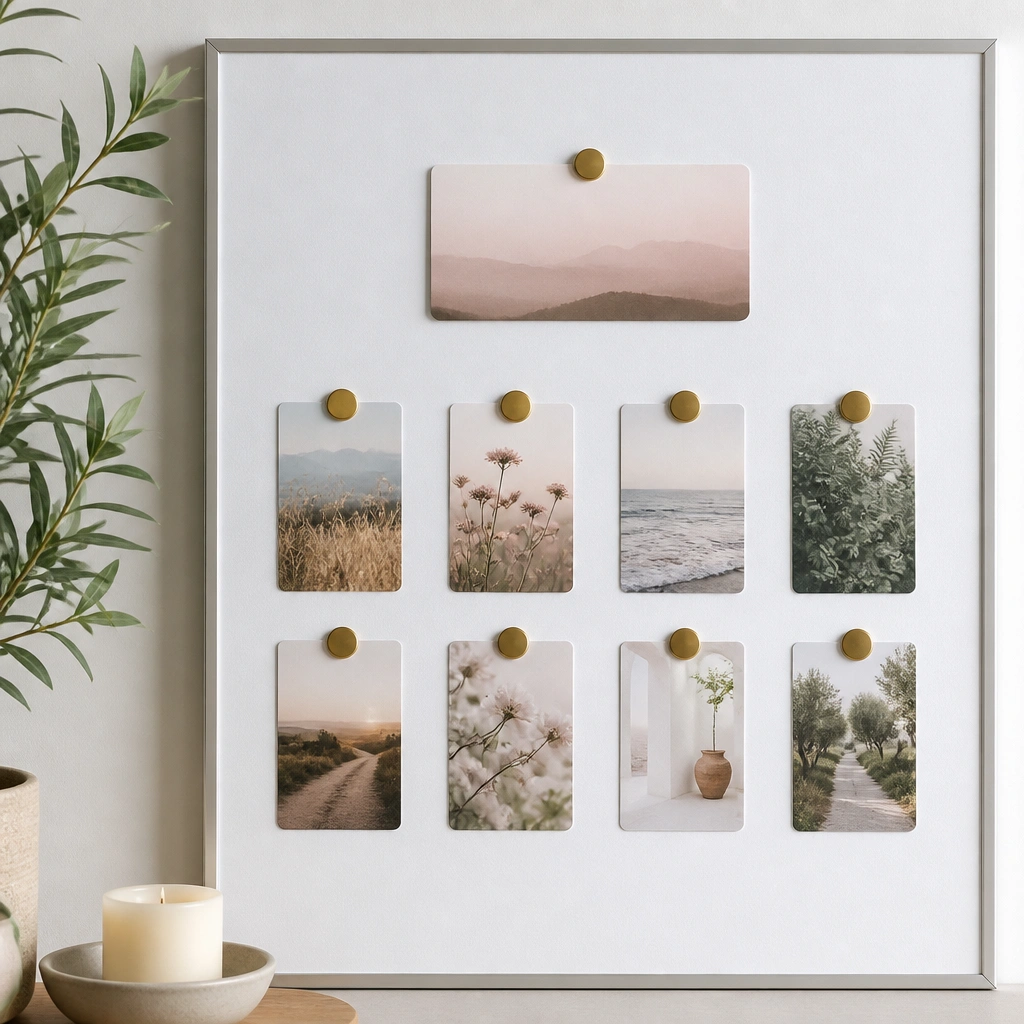
If your family likes moving things around, magnets are the fastest swap method. Use a magnetic sheet or magnetic paint base, then mount it on a board. Rounded magnets prevent sharp edges from catching on kids’ fingers.
Good to knowAttach a “return row” at the bottom for cards so kids know where to put everything back.
4. Corkboard Prayer Board with Washi-Tape Sections
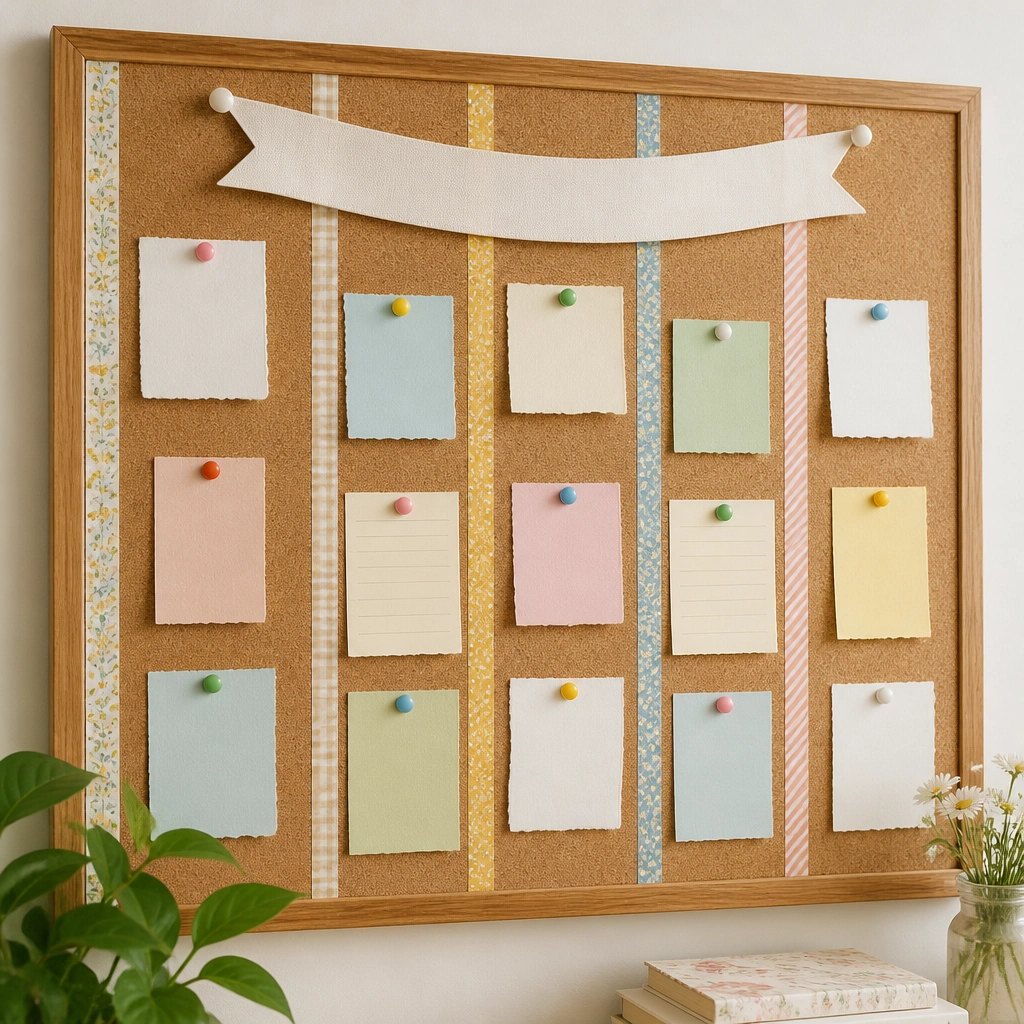
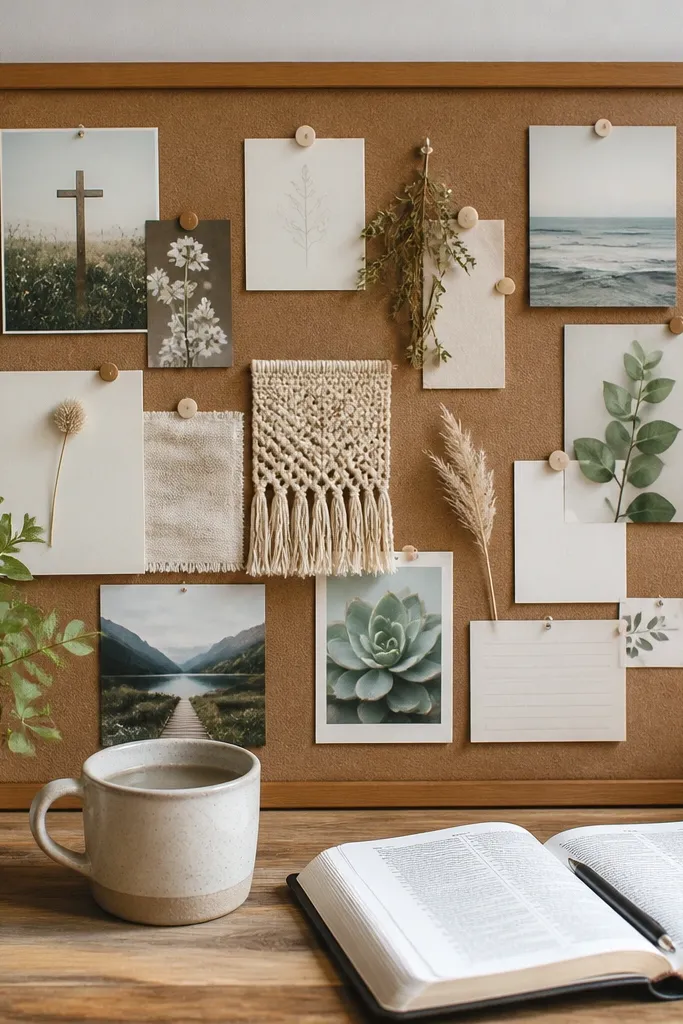
Cork is classic, but the key is making it kid-friendly by adding clear sections. Washi tape creates boundaries that reduce messy pinning. Use a limited color palette (2-3 washi colors) so it looks intentional instead of chaotic.
Good to knowPin only cards on pre-cut cardstock so paper doesn’t tear or fray at the pin hole.
5. Felt Prayer Board with Velcro Dove Icons
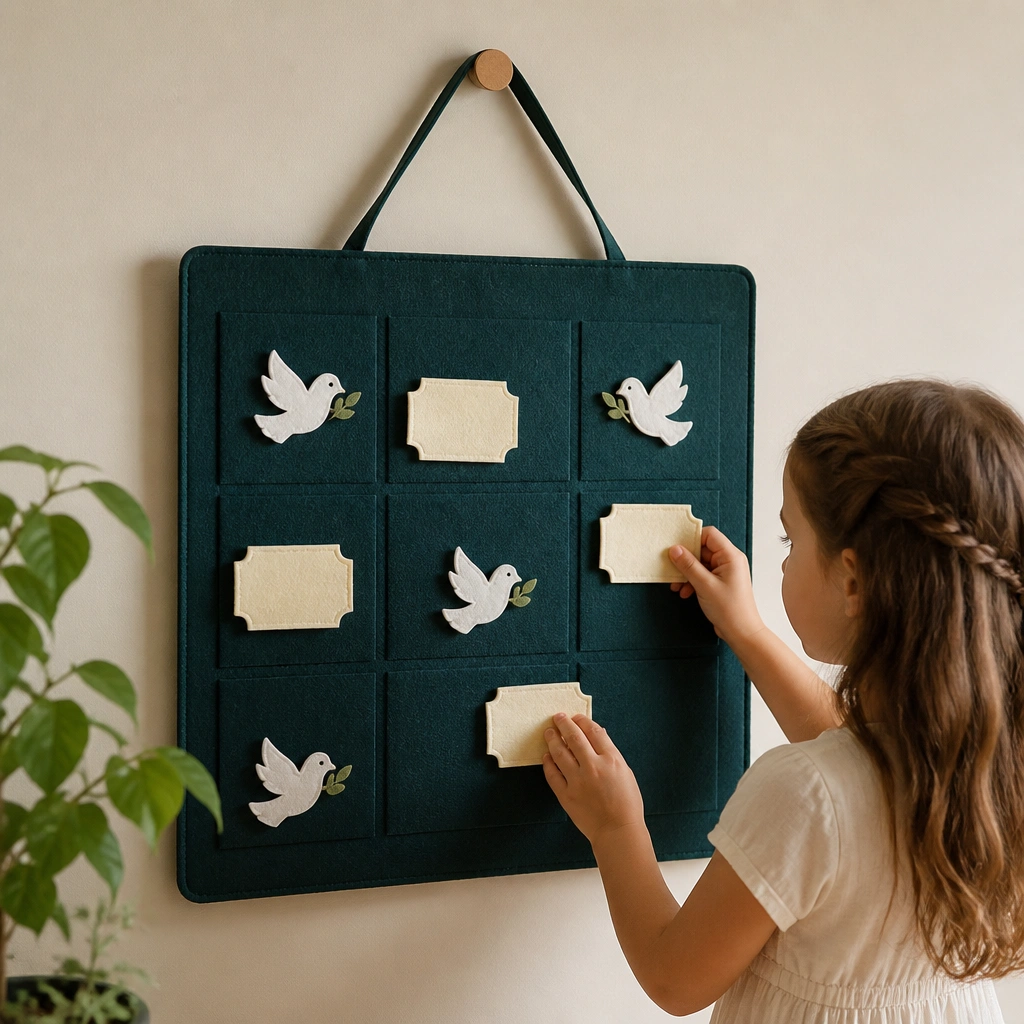
Felt boards are soft, quiet, and forgiving for little hands. You can pre-cut simple shapes (dove, heart, cross) and pair them with Velcro on the back of cards. Stitch or hot-glue the felt edges so it doesn’t peel.
Good to knowUse loop Velcro on the board and hook Velcro on the cards — it grips better and reduces snagging.
6. Clear Acrylic Pocket Prayer Board (Wall-Safe + Clean)
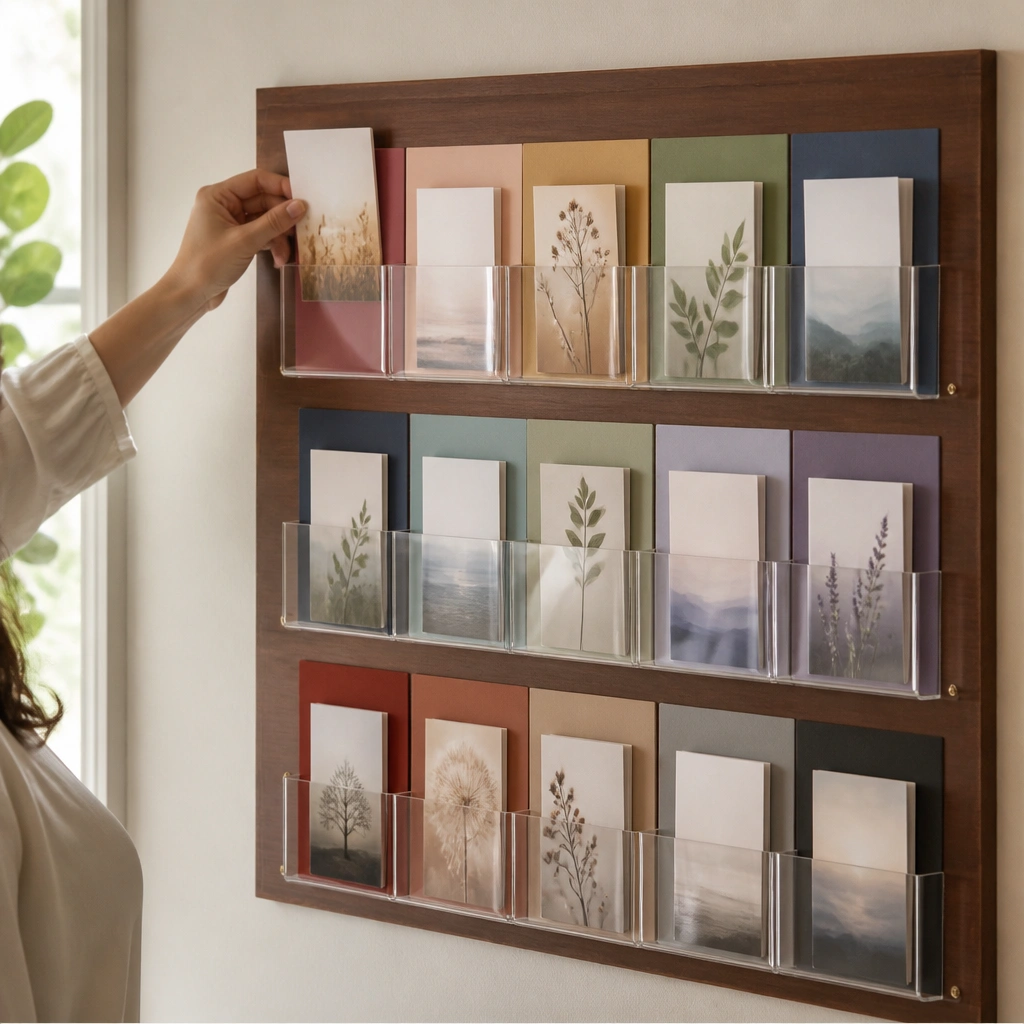
Clear pockets keep everything readable and reduce the “torn paper” problem. The colored backing makes cards pop, even from across the room. This style also helps kids learn where each card belongs because the pocket shape acts like a guide.
Use photo sleeves behind the cards for extra protection if your kids like to touch everything.
7. Twin-Color Prayer Board with Magnetic Labels
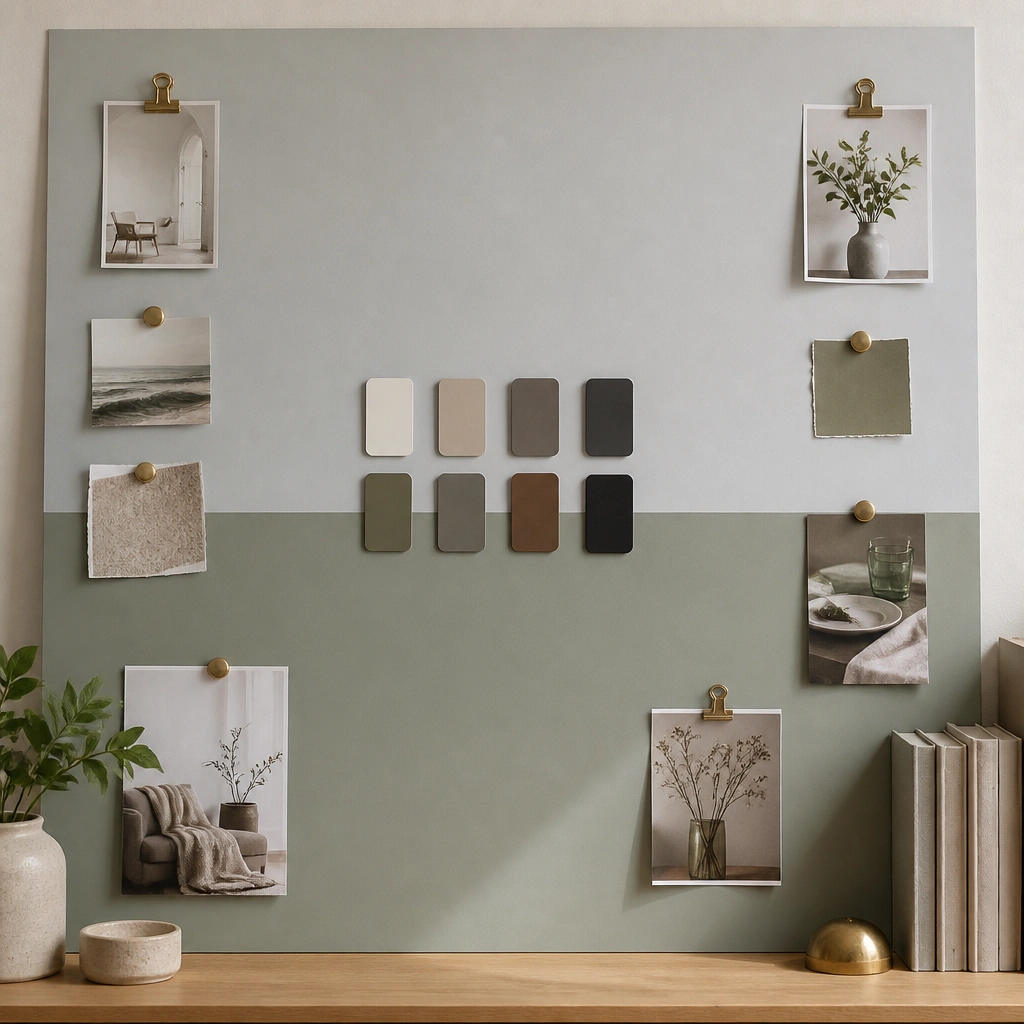
The two-tone look is great for teaching categories without adding more clutter. Keep the layout simple: one side for “thank you,” one for “please help,” and a small middle for “today’s verse.” Magnetic labels make category updates easy.
Good to knowWrite labels with a thick white paint marker so they stay legible after wiping fingerprints.
8. Kids’ Corner Prayer Board on a Rolling Clipboard Stand
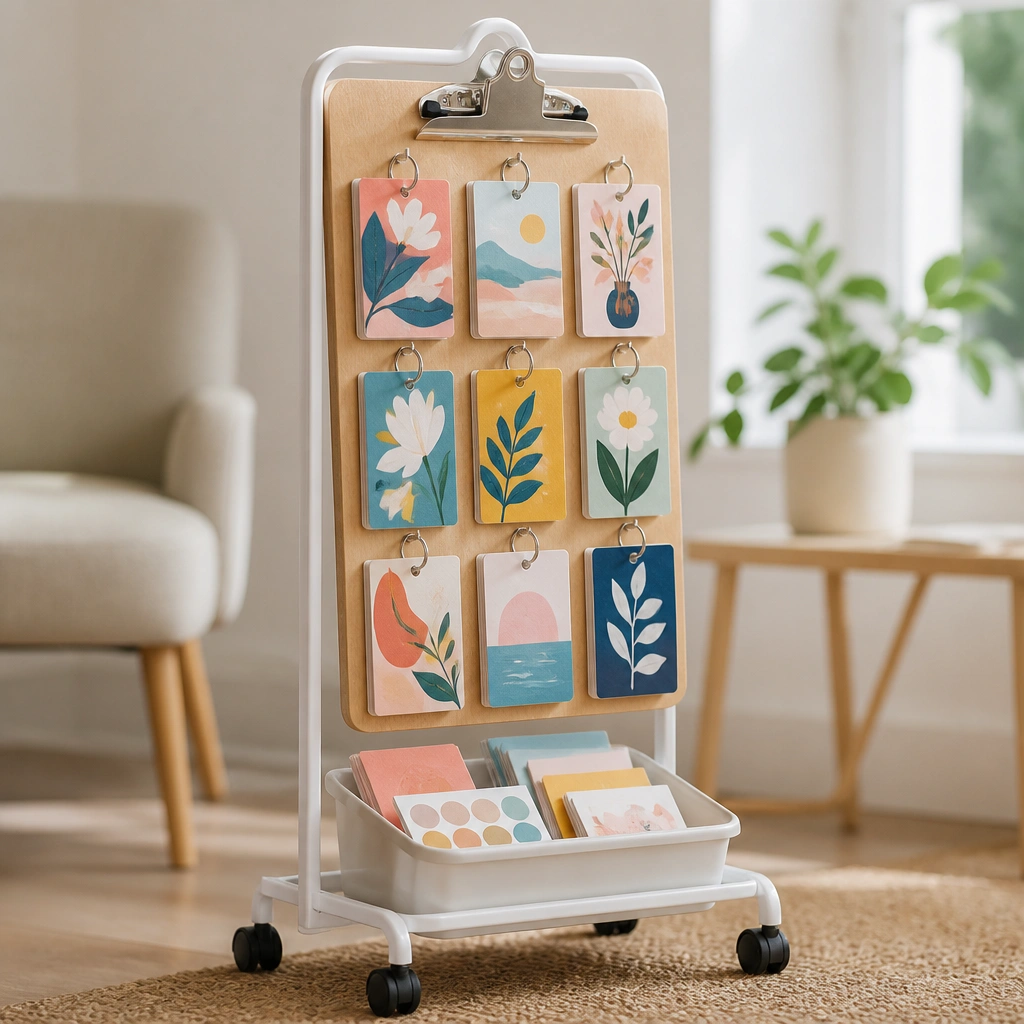
If your kids move around, a stationary wall board won’t work as well. A clipboard or small tabletop board lets you keep cards together and reduces dropping pieces. Add a tiny supply bin so the prayer routine stays contained.
Good to knowUse clip rings instead of loose paper clips so cards don’t slip off during play.
9. Store-Bought Upgrade: Add Velcro Pockets to a Ready Board
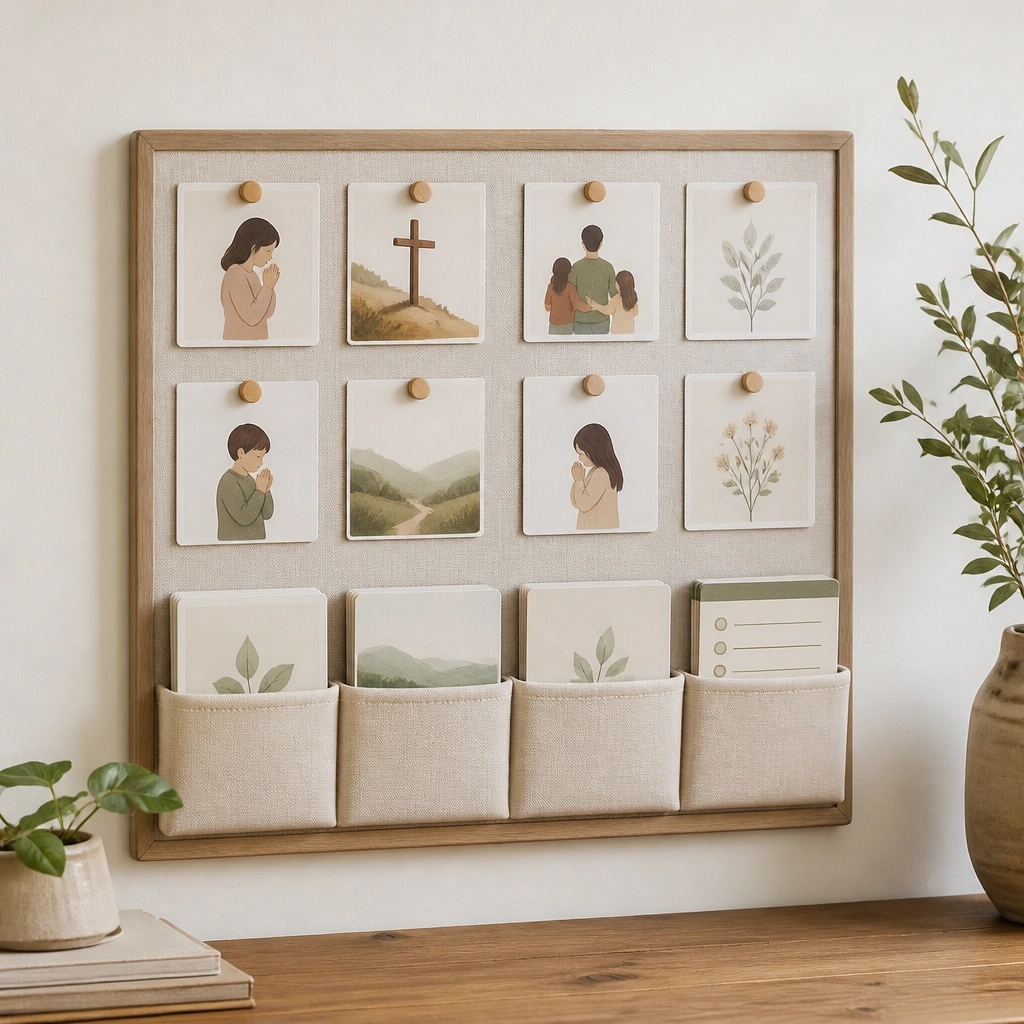
This is the best middle-ground if you already own a store-bought board. You keep the quick setup, but you gain DIY flexibility by adding pockets for different card sizes. Fabric pockets also prevent corners from curling.
Good to knowHot-glue or sew the pocket backing to a sturdy fabric strip, then attach that strip to the board with Velcro for easy removal.