

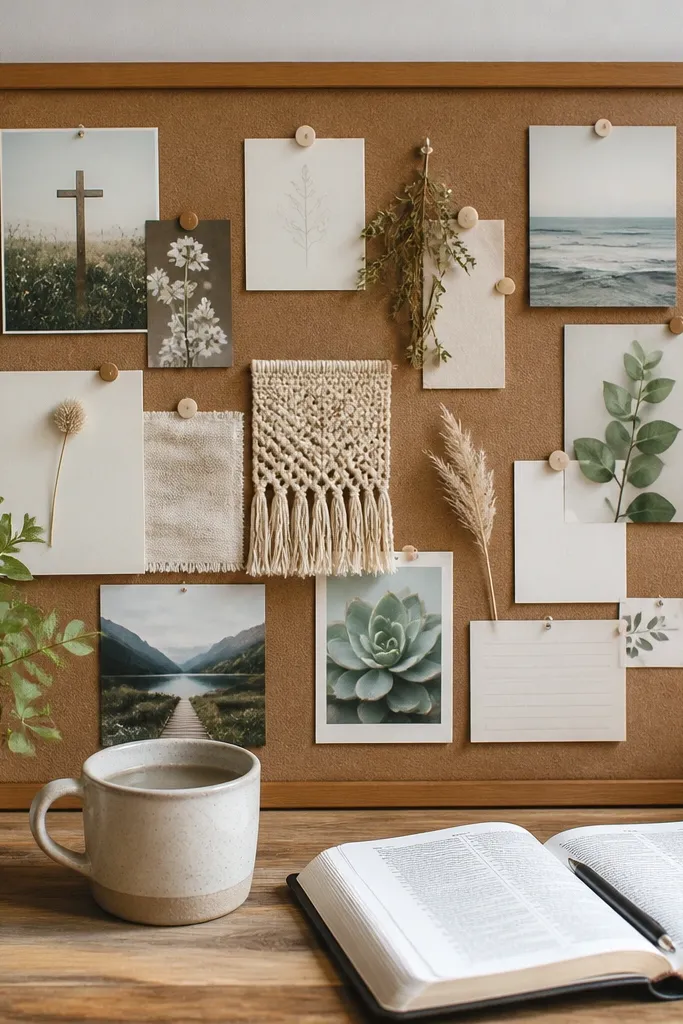


1. Cork Tile + Color-Coded Prayer Cards
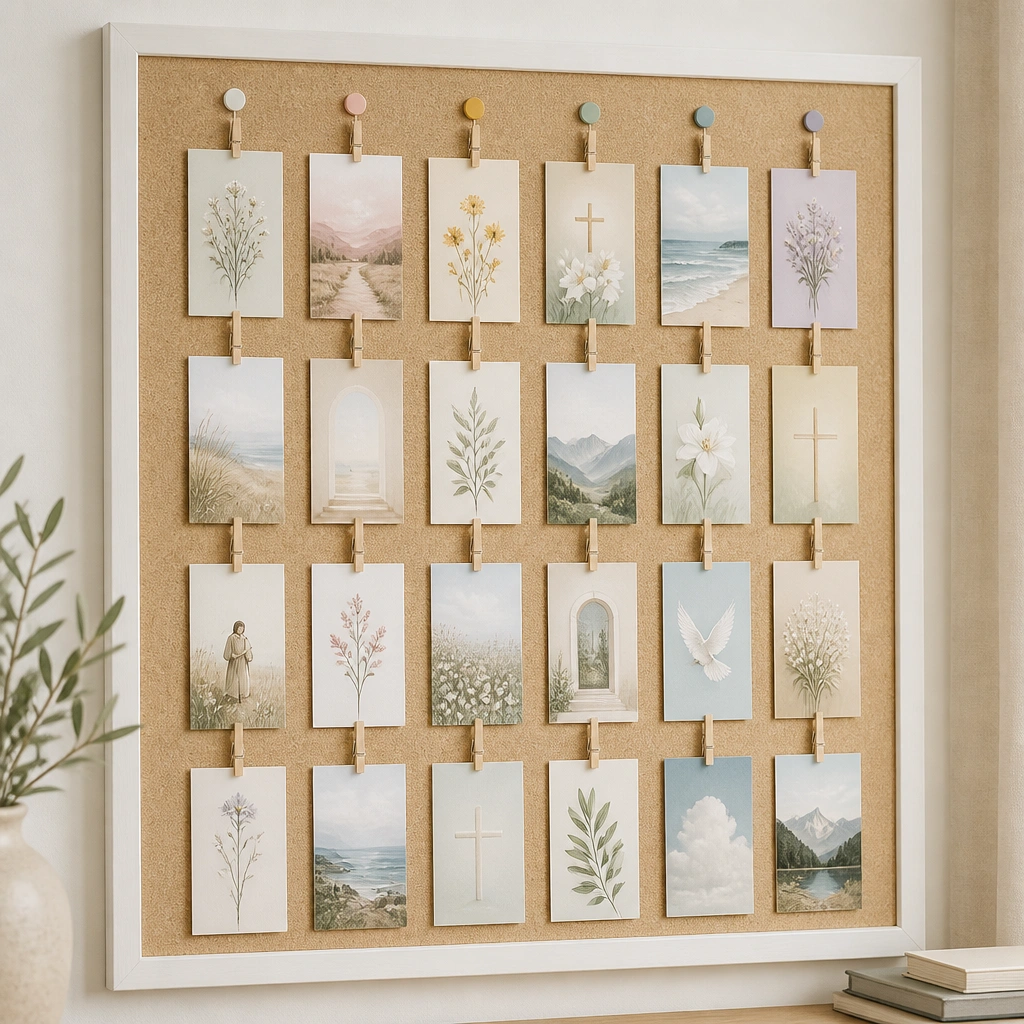
Start with a cork tile (or cork sheet cut to size) and add a thin white frame for a clean, Pinterest-ready look. Use prayer cards printed on cardstock with colored dots for categories like family, school, and gratitude. This works because the visual order makes it easier for kids to find the right card without rummaging through drawers.
Good to knowPin one “Today” card at the top and rotate it daily to create a simple routine.
2. Fabric Pocket Wall for Little Hands
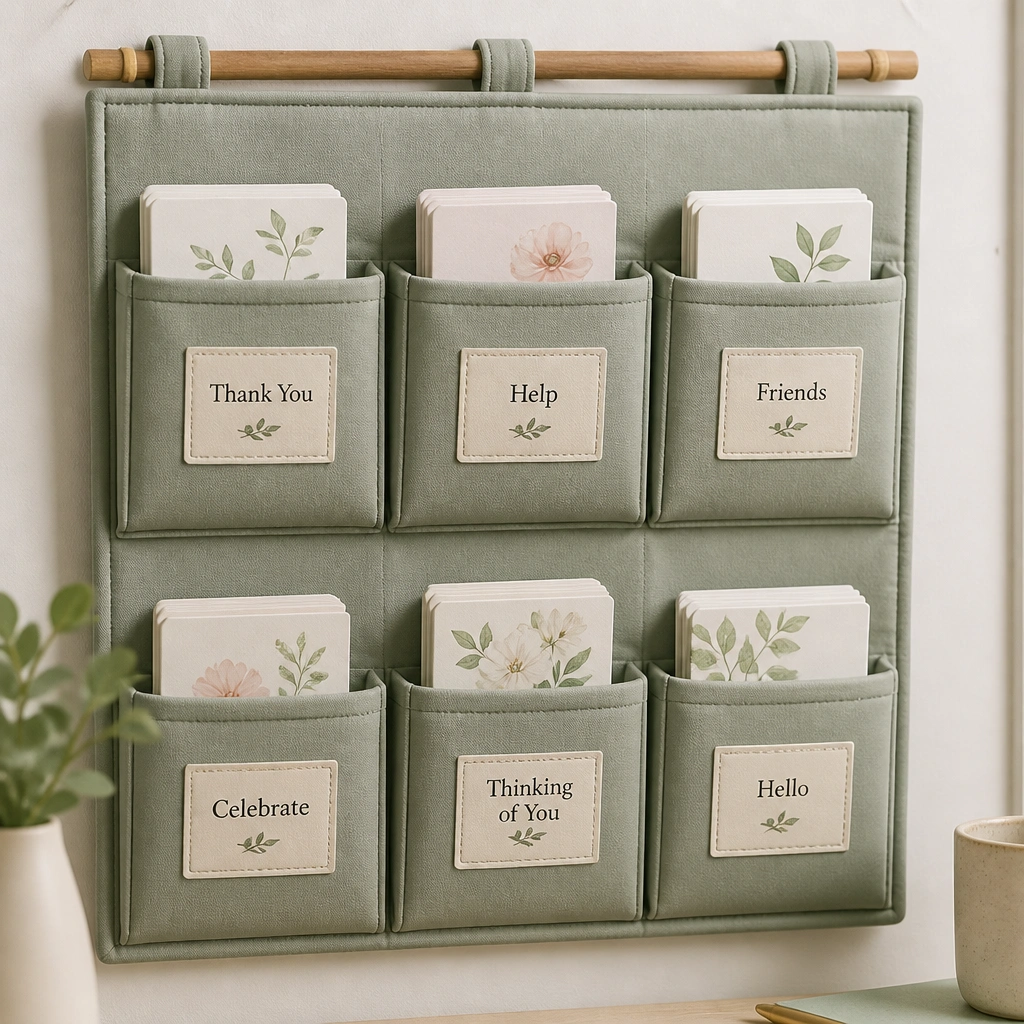
Use a piece of cotton canvas or felt as the base and sew or hot-glue pockets in rows. Add labels with fabric marker or iron-on letters. Kid-friendly pockets reduce mess because cards stay contained, and kids can “drop” prayers into the right space without pinning anything.
Good to knowMake pocket openings slightly wider than a standard index card so cards slide in easily.
3. Magnetic Verse Strip with Mini Cards
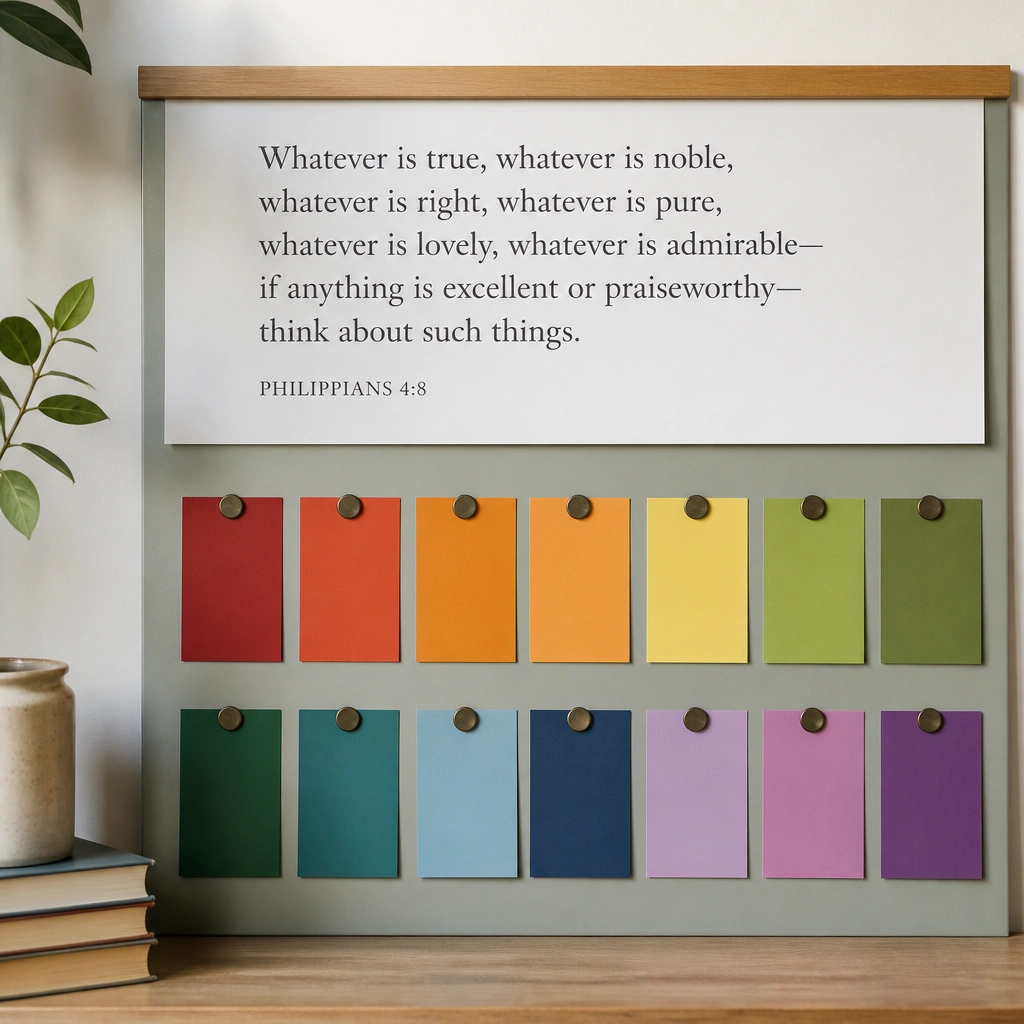
Paint a thin sheet of metal (or use a magnetic whiteboard panel) and mount it on a backing board. Add a verse strip at the top and use magnetic mini cards for prayer requests. This creates a tidy, modern look and lets kids rearrange prayers without damaging the board.
Good to knowAttach small self-adhesive magnets to paper cards using a craft knife to keep corners flat.
4. Washitape Prayer Timeline (Weekly Layout)
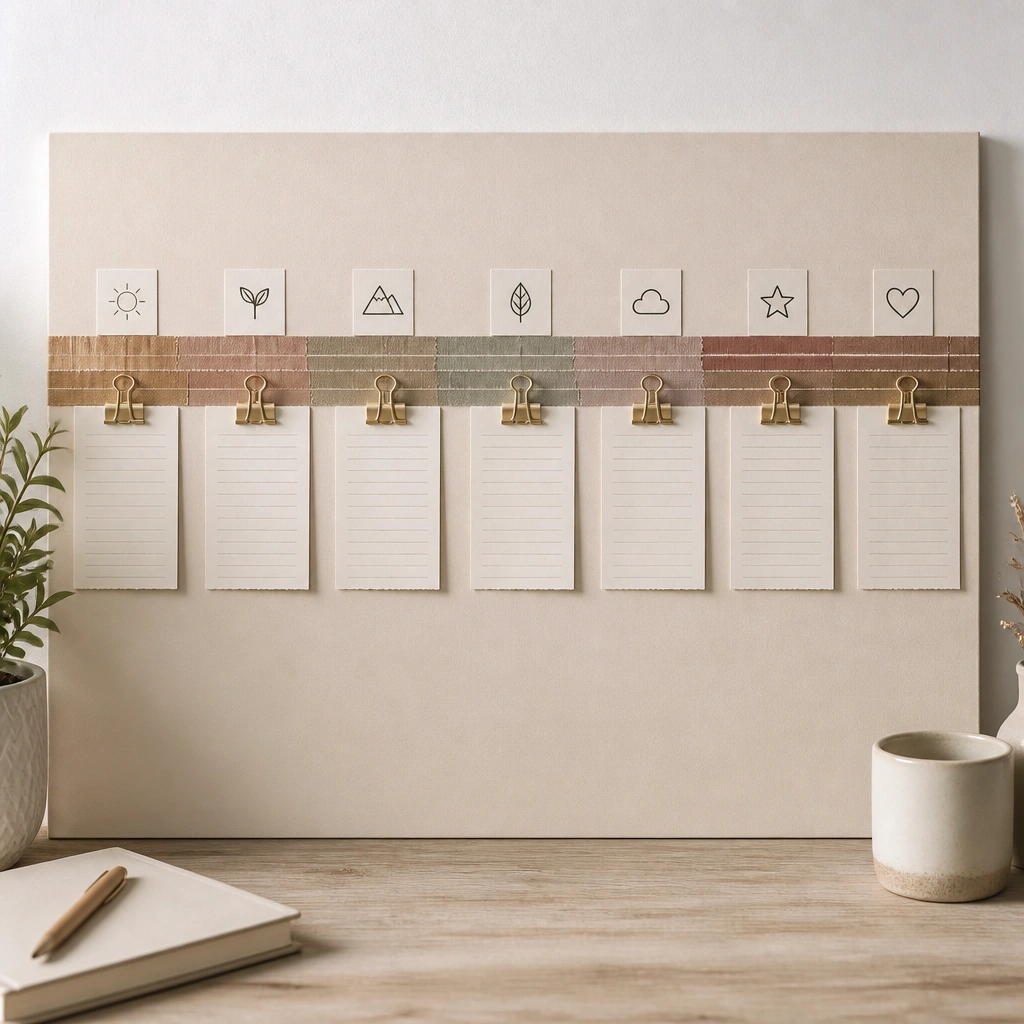
Cover the board with a solid backing paper, then create a week timeline using washi tape stripes. Label each day with simple icons (heart for gratitude, star for guidance, etc.) and clip prayer cards into each section. The timeline helps kids understand “when” prayers belong, not just “what.”
Good to knowWrite the day numbers in pencil first, then trace with a fine-tip marker for clean lines.
5. Shadow Box “Answered Prayers” Corner
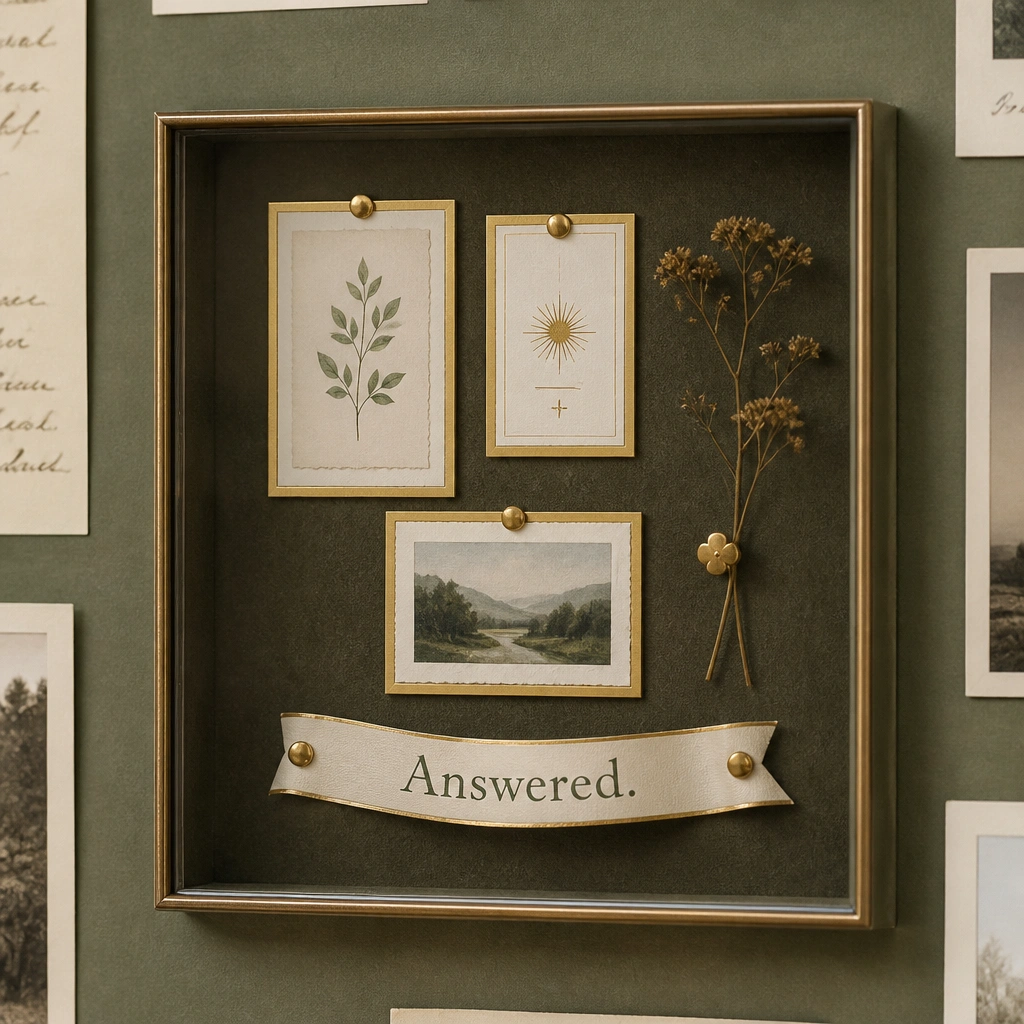
Dedicate a small shadow box area for answered prayers so it feels special. Use gold or warm cream backing felt, and place cards in front of a simple “Answered Prayers” label. This adds an aesthetic focal point and gives kids a visible win, which makes the whole practice feel hopeful.
Use clear page protectors for each card so the box stays tidy and dust-free.
6. Linen + Clip Line for Daily Requests
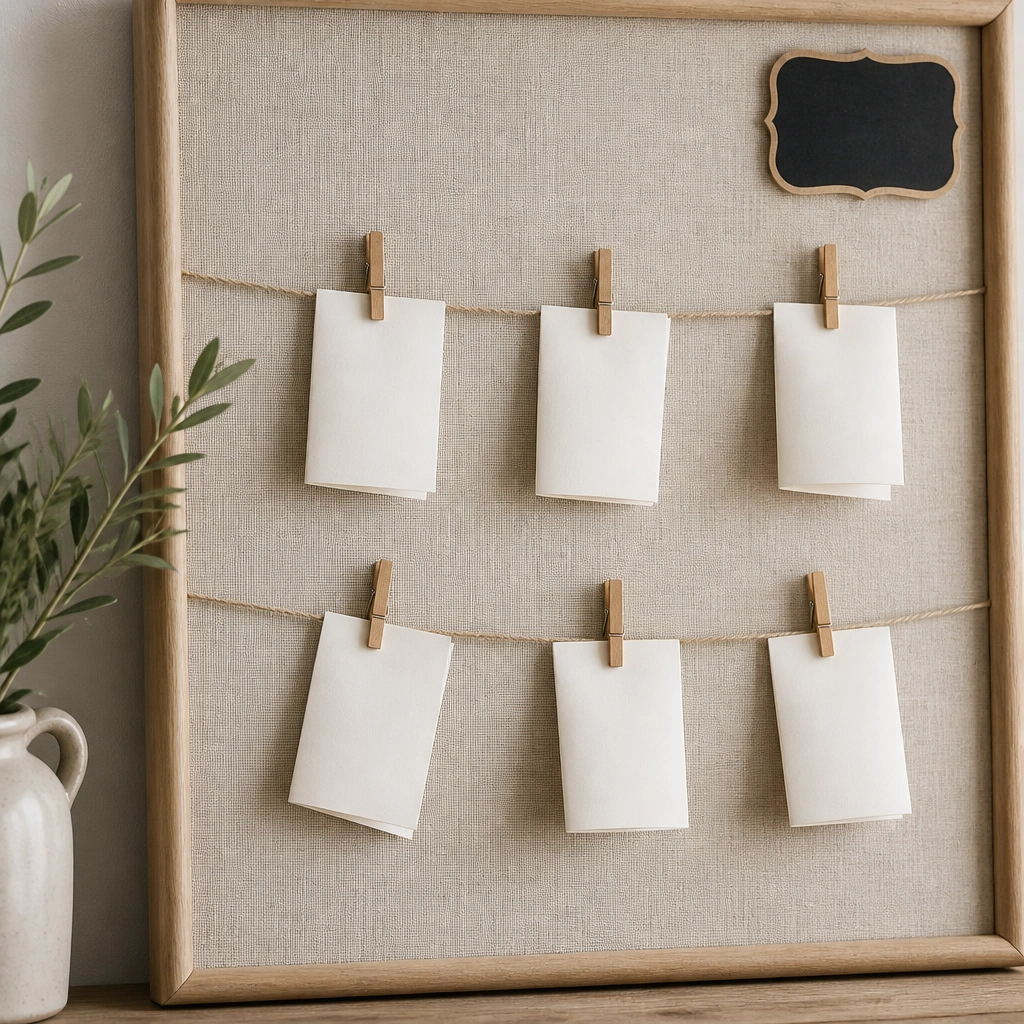
Wrap a foam board with linen or burlap (not too scratchy) and add two horizontal cords or twine lines. Use clothespins to hang small folded notes. The “clip line” look is soft and homey, and it lets kids hang prayers themselves, which increases ownership.
Good to knowFold notes into thirds and tie with a tiny ribbon so they look like mini letters.
7. Blueprint-Style Prayer Maps (World & Community)
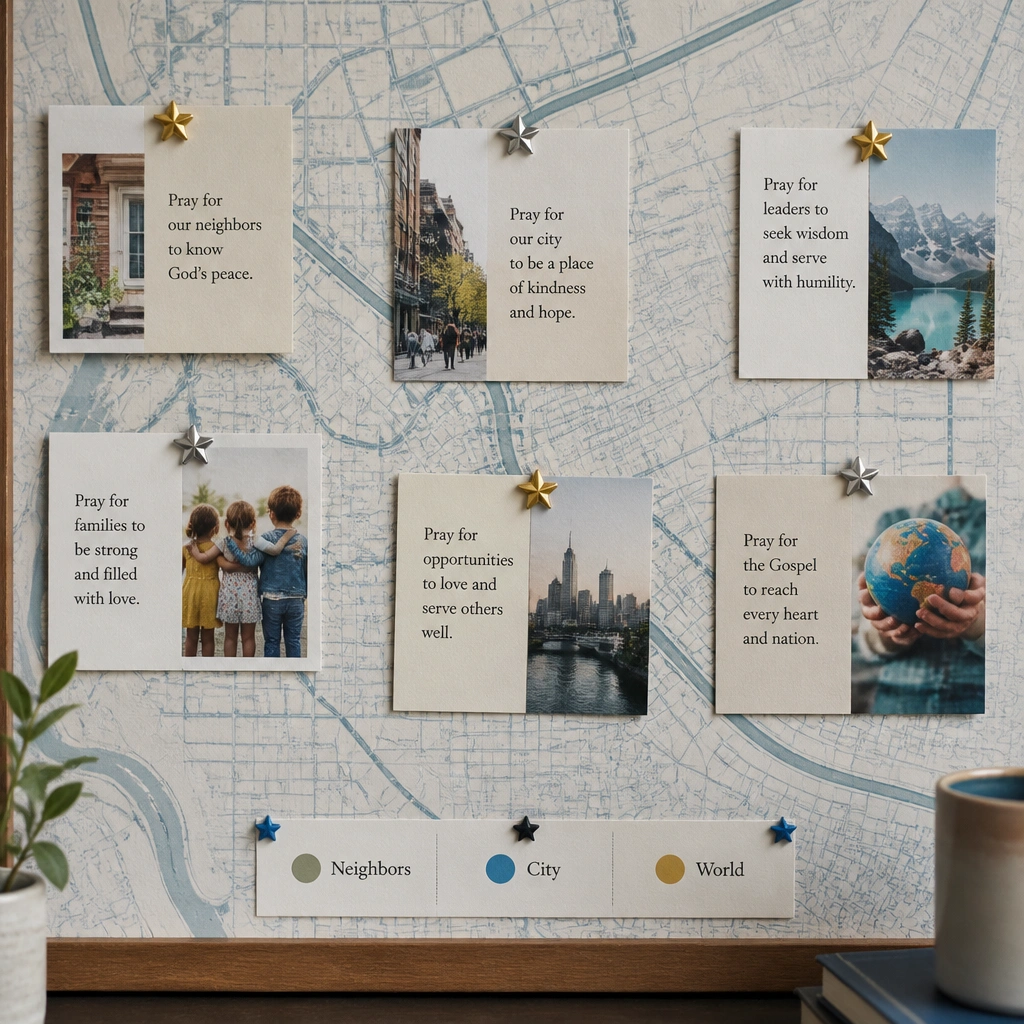
Print a simple map or use scrapbook paper with grid/map patterns. Add a “legend” area with three categories and pin prayer cards using star push pins. This style is great for families who like big-picture prayers, but still want clear organization for kids.
Good to knowUse a muted color palette (navy, cream, light blue) so it stays calm and not busy.
8. Layered Paper “Prayer Steps” (Gratitude to Help)
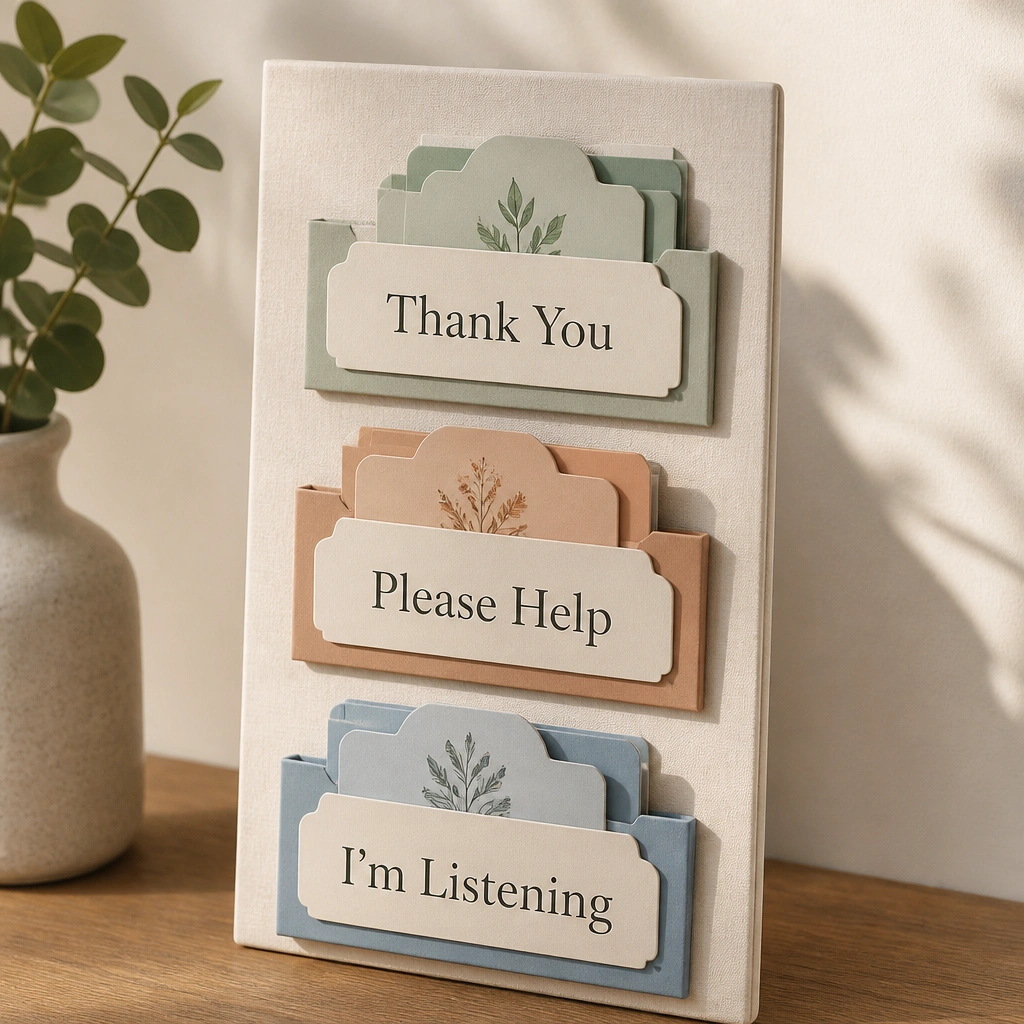
Create three layered step shapes using cardstock or foam sheets and glue them onto a backing board. Add tabs or tuck pockets behind each step so cards don’t fall out. The steps guide kids through a simple prayer flow without needing adults to prompt every time.
Good to knowKeep card sizes consistent (like 3x5) so the tucked tabs look neat.
9. Chalkboard Center + Clear Sleeve Cards
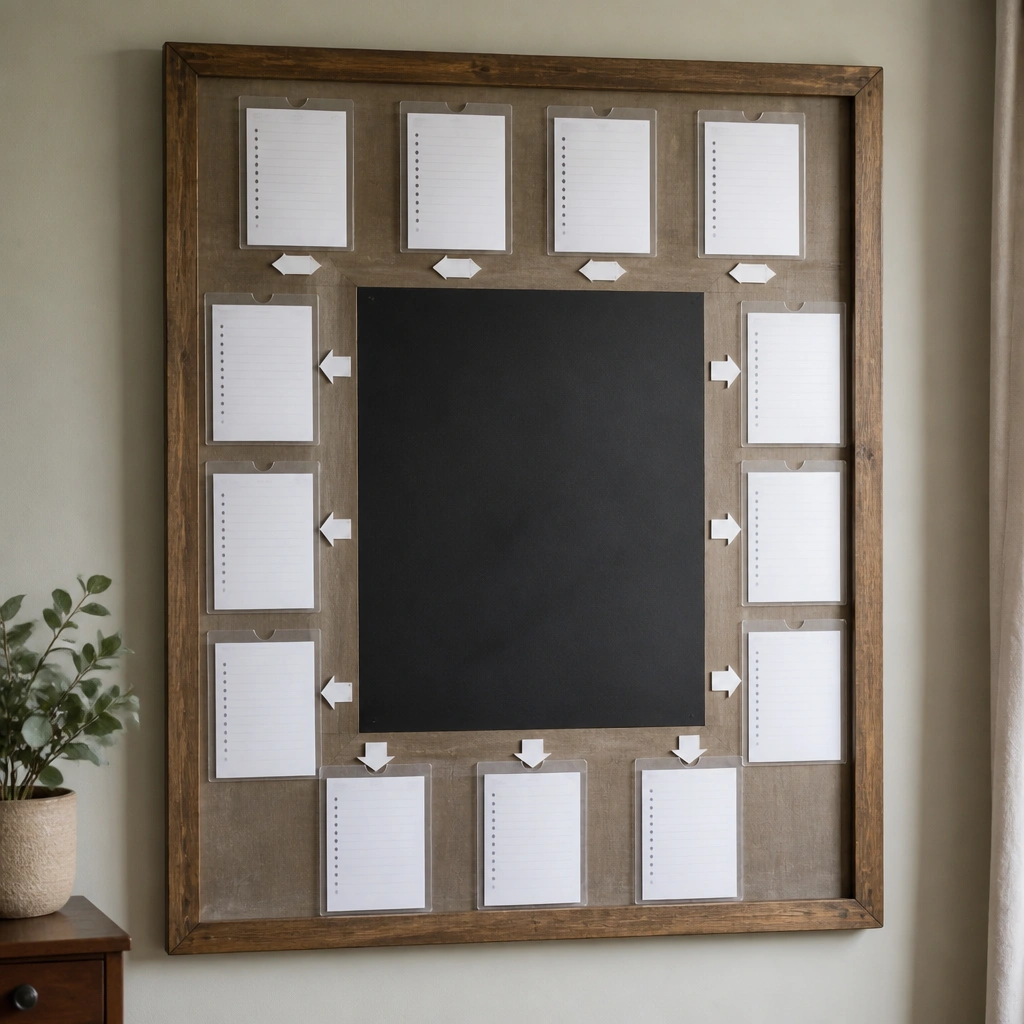
Paint a center square with chalkboard paint or use a small chalkboard panel. Add clear sleeves (from document holders) around it for static lists like “How we pray” and “Family names.” This combo is aesthetic and practical: the chalk area is for daily updates, while sleeves keep everything readable.
Use washable chalk markers to prevent smudges and make updates faster.
10. Scrapbook Border + “Prayer People” Photo Slots
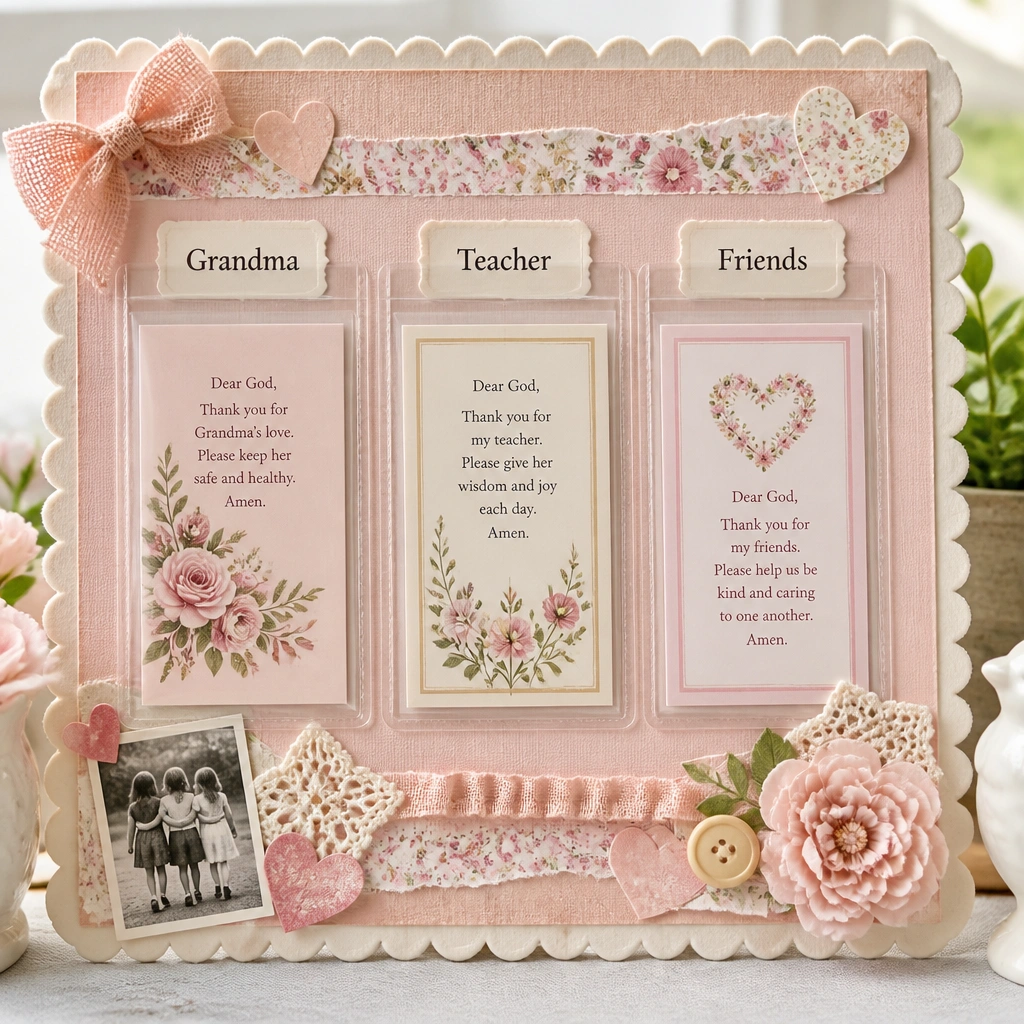
Frame the board with patterned scrapbook paper border strips and add a grid of clear pockets for “prayer people.” Label each slot and tuck in a prayer card with the person’s name and one specific request. This works because kids recognize faces/names, making prayer feel personal rather than abstract.
Good to knowKeep one request per person so kids can remember what to pray without getting overwhelmed.