



1. Mood Snapshot Page (Color-Coded Feelings)
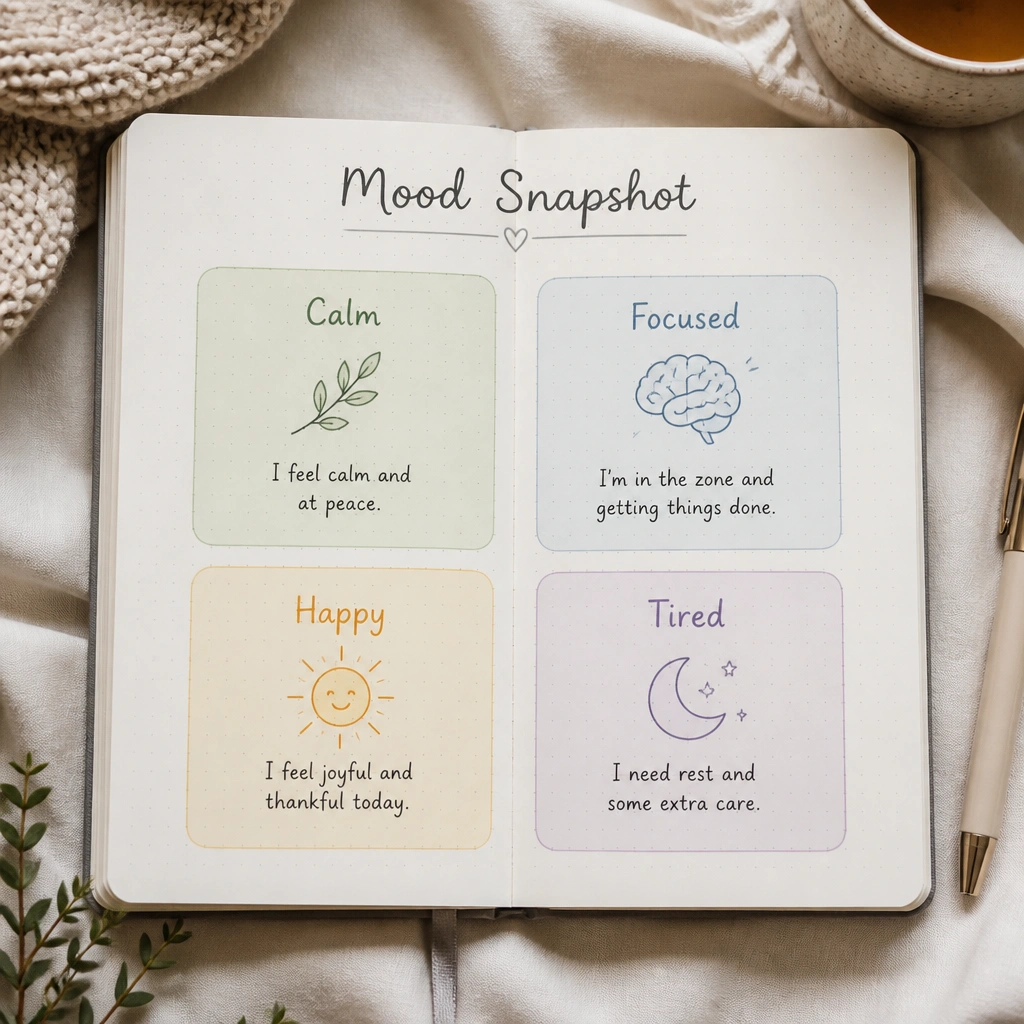
Pick 4 emotions you actually use and assign each one a color (soft yellow for calm, mint for focused, peach for happy, lavender for tired). Write one sentence per box that includes a concrete detail from your day — like 'I drank my coffee slowly while the rain hit the window'. The color boxes make the page look intentional even if your writing is brief.
Good to knowBefore you write, choose your pen colors once — then stick to them for that whole spread so it looks cohesive.
2. Pressed Petal Memory Corner
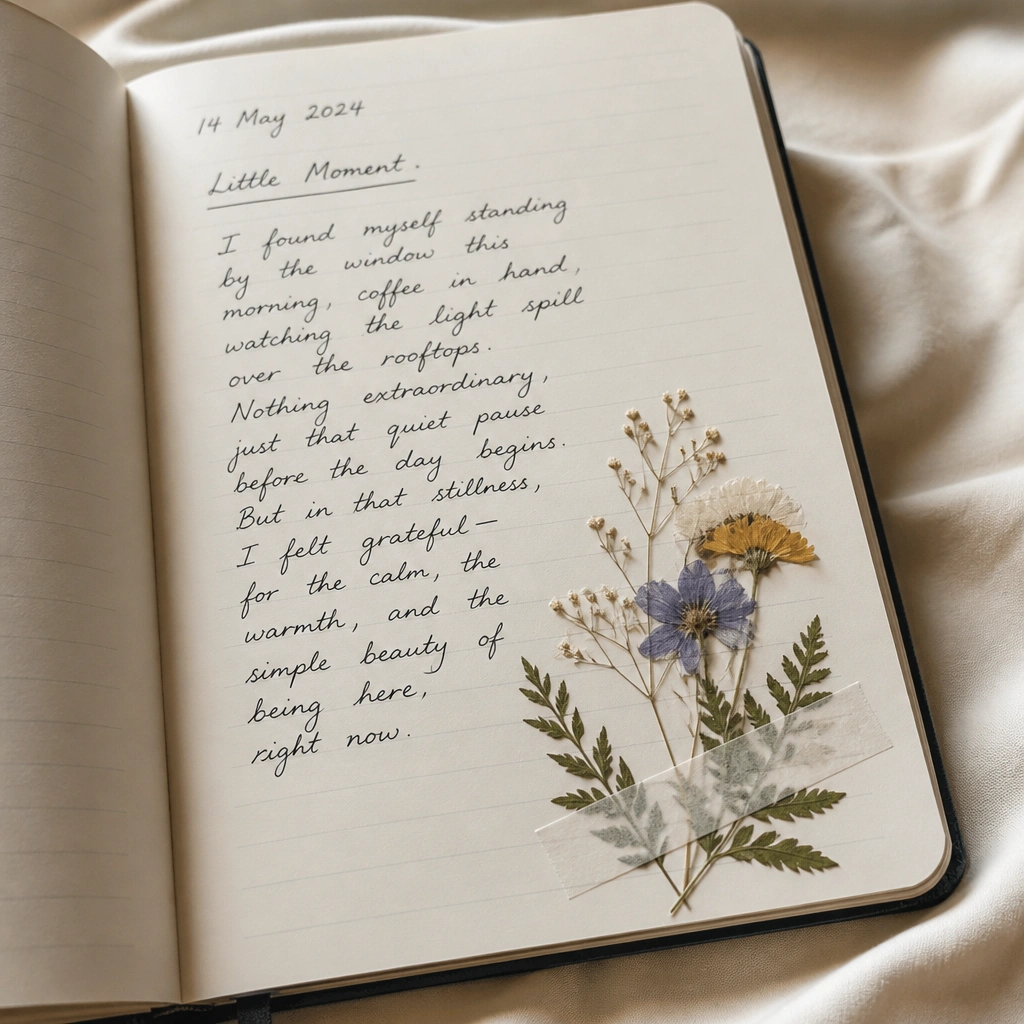
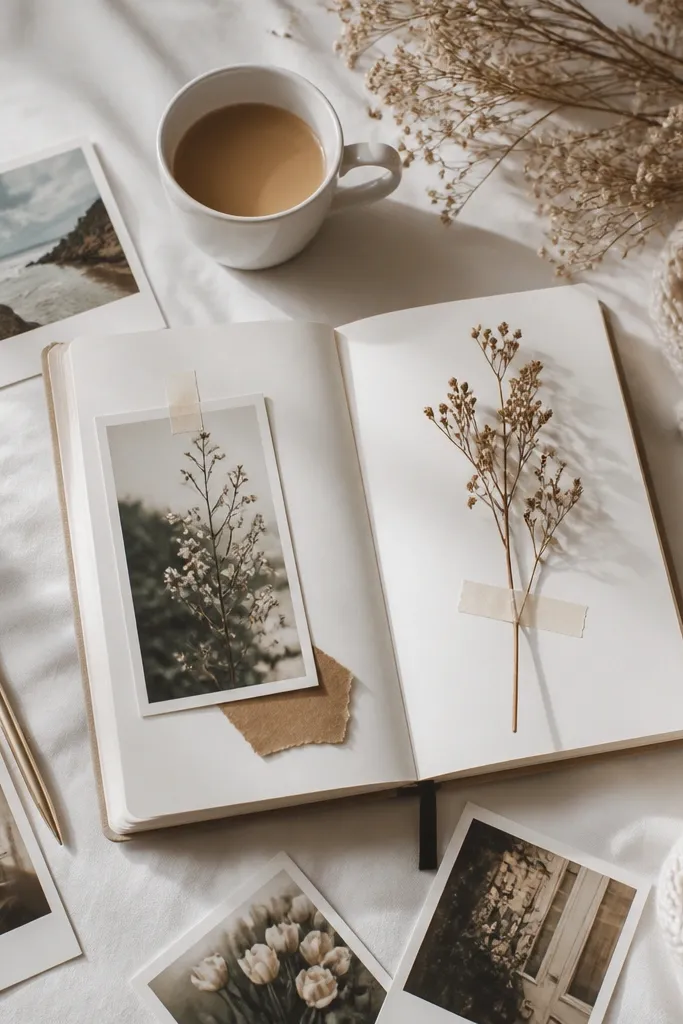
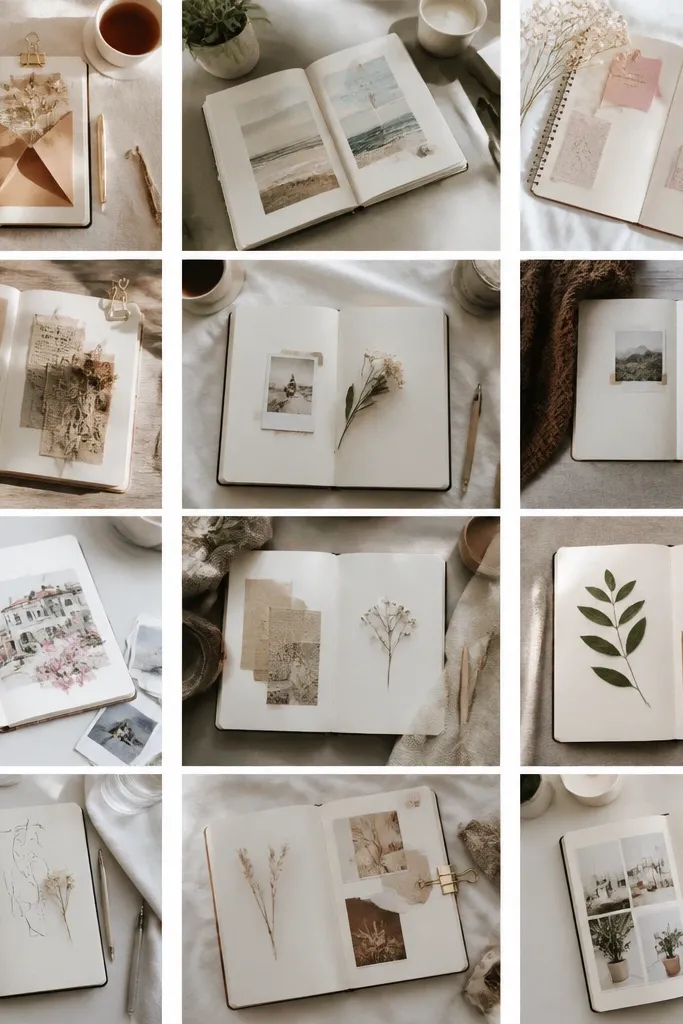
Write about one small moment that matches the flower you’re using — a sidewalk daisy for an afternoon walk or a tiny leaf for a quiet morning. Place the pressed petal in the corner like a bookmark ornament, then write a 3-sentence entry: what you saw, what you felt, and what you’ll remember. The tactile element makes the page feel like a keepsake.
Good to knowUse a single layer of clear tape along the edges only — it keeps the petal flat without covering your writing.
3. Washi Tape Border + Tiny List Entry
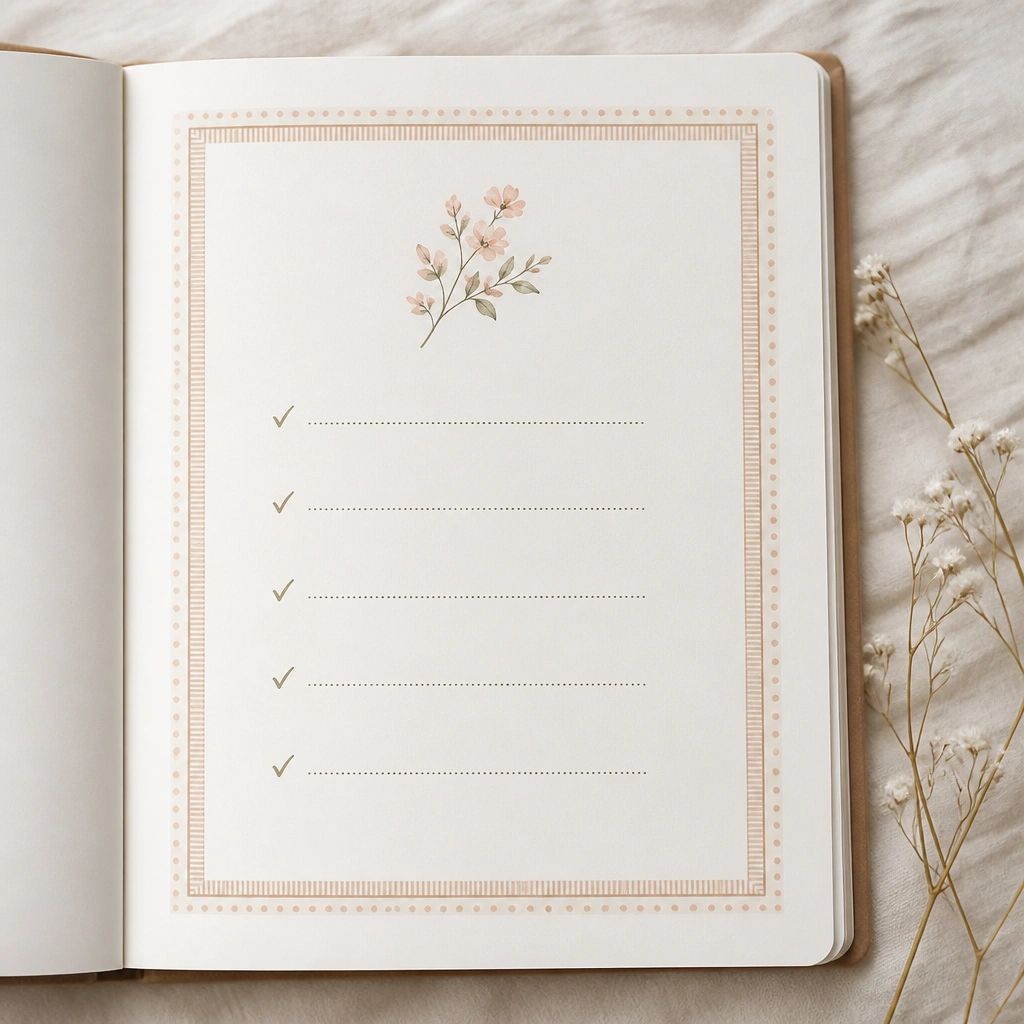
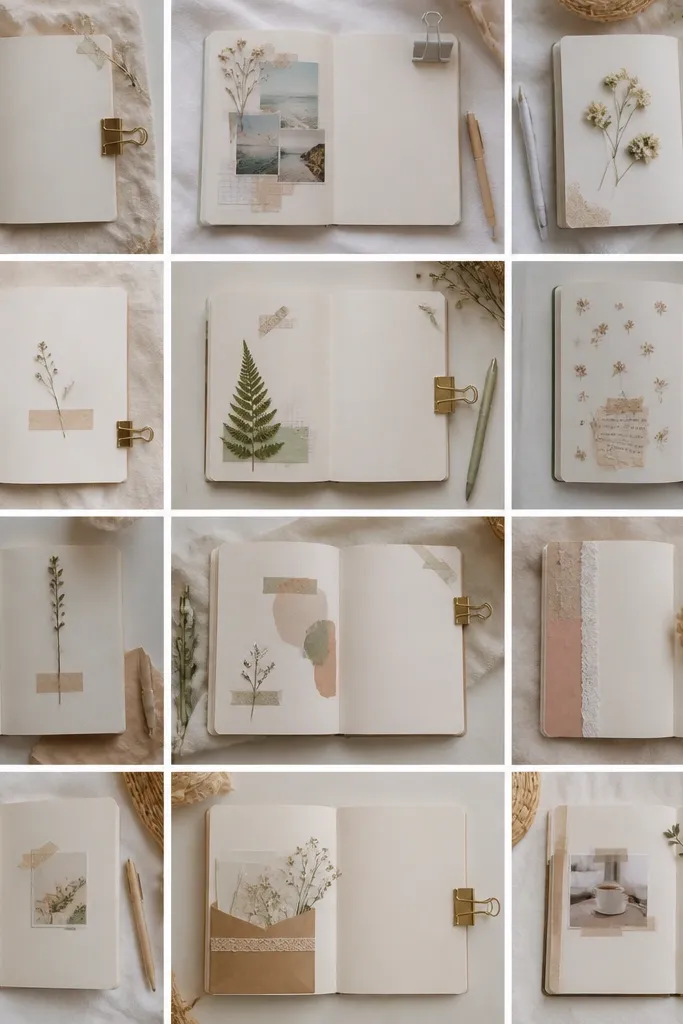
Turn everyday notes into aesthetic content by framing them. Create a border with two washi tapes that share a color palette (like cream + sage or blush + gold). Then write a tiny list entry: 5 things you noticed today, 5 wins no one saw, or 5 things you want to do this week. Keep each line under 8 words so the page stays airy.
If your tape is patterned, choose plain ink for the text — black or deep brown — so it stays readable.
4. Gratitude Letter to Future You
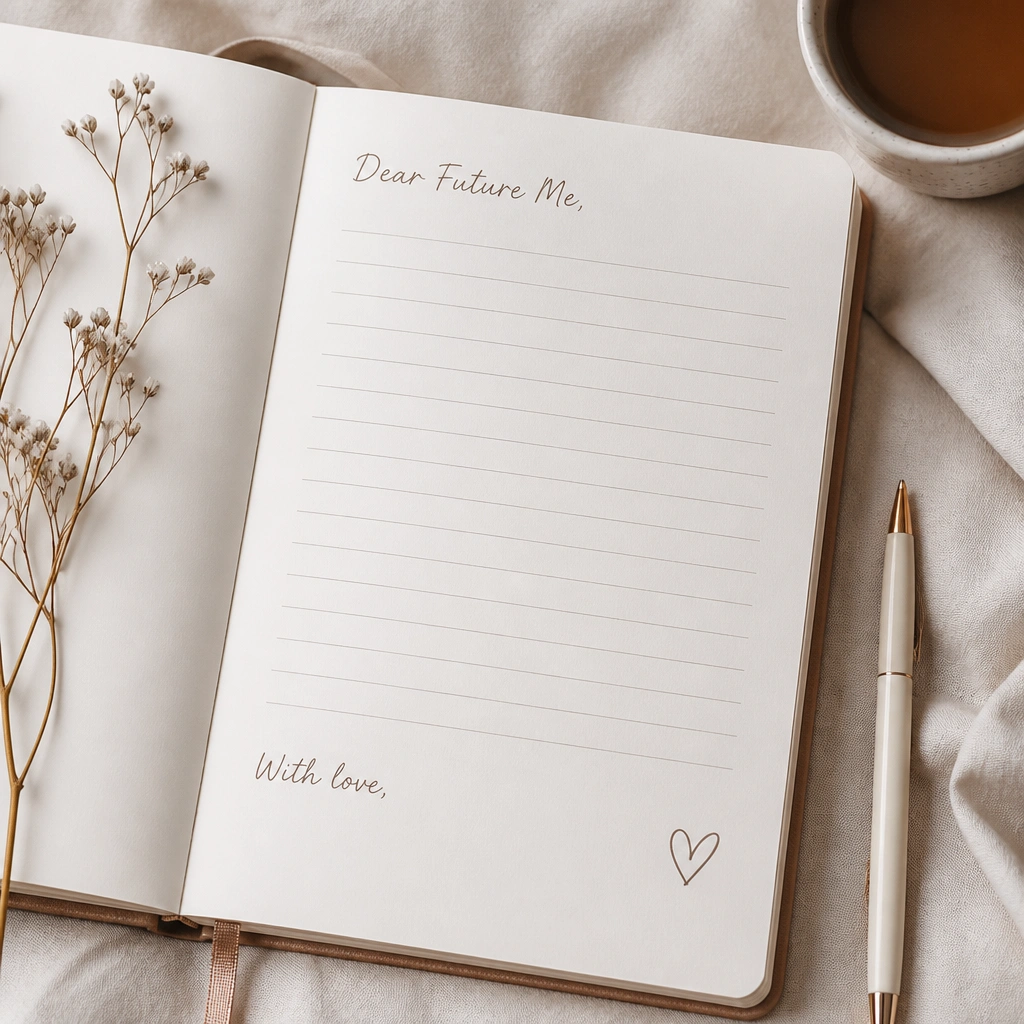
Write one gratitude letter using a calm, personal tone. Format it like a mini note: 1 sentence about what you’re grateful for, 1 sentence about how it changed your day, and 1 sentence advising your future self. This works beautifully for empty pages because it feels like writing to someone, not documenting everything.
Good to knowEnd with a time anchor like 'When you read this next month, remember...' so future-you has a reason to smile.
5. Cut-Out Photo Frame Quote Page
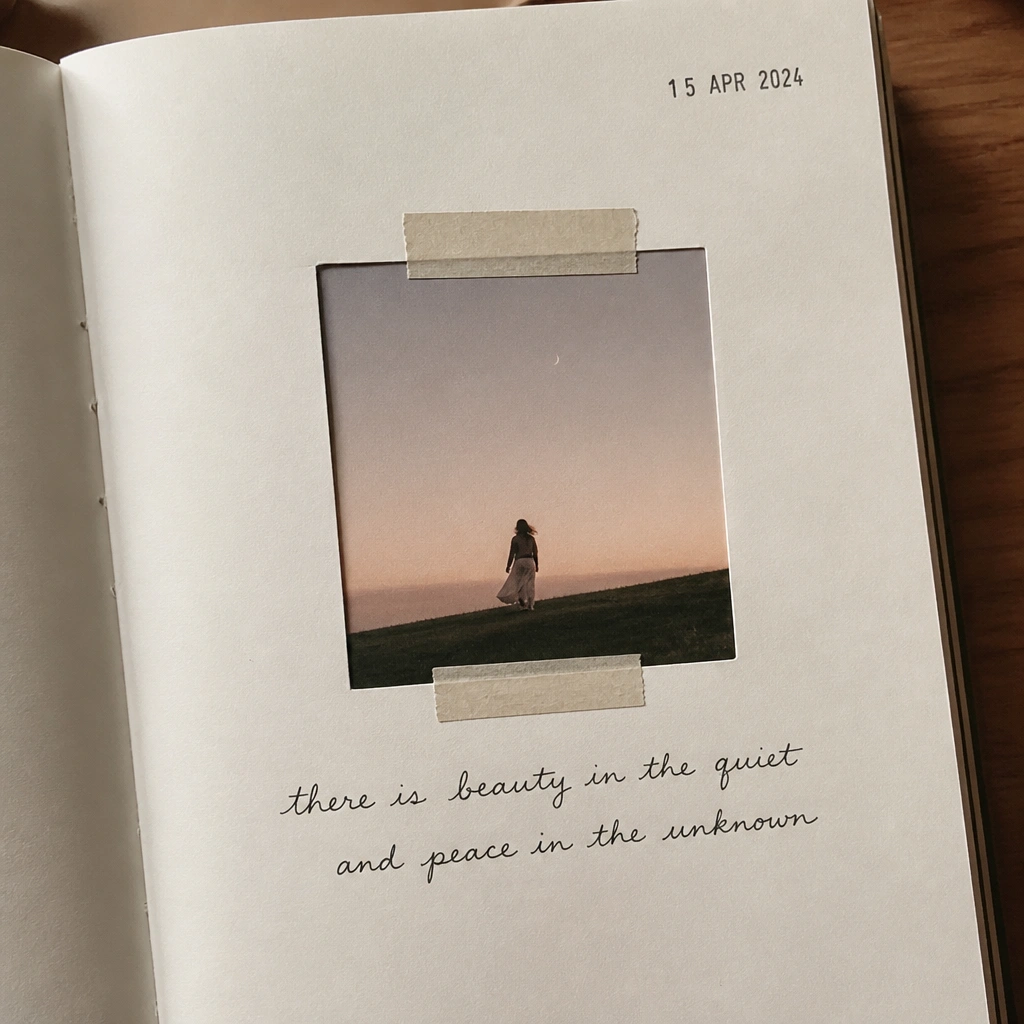
Print or screenshot a tiny image you love — a cafe sign, a sunset sky, a book spine. Cut a square frame from patterned paper or cardstock, then tape it around the photo. Write a short quote to yourself in the margin (not a famous quote — your own words) and add 2 sentences explaining why that image matches your mood. The photo frame makes even one paragraph look designed.
Good to knowUse matte tape over the corners of the photo so it won’t peel up as you flip the diary pages.
6. Checklist + “Before/After” Mini Transformation
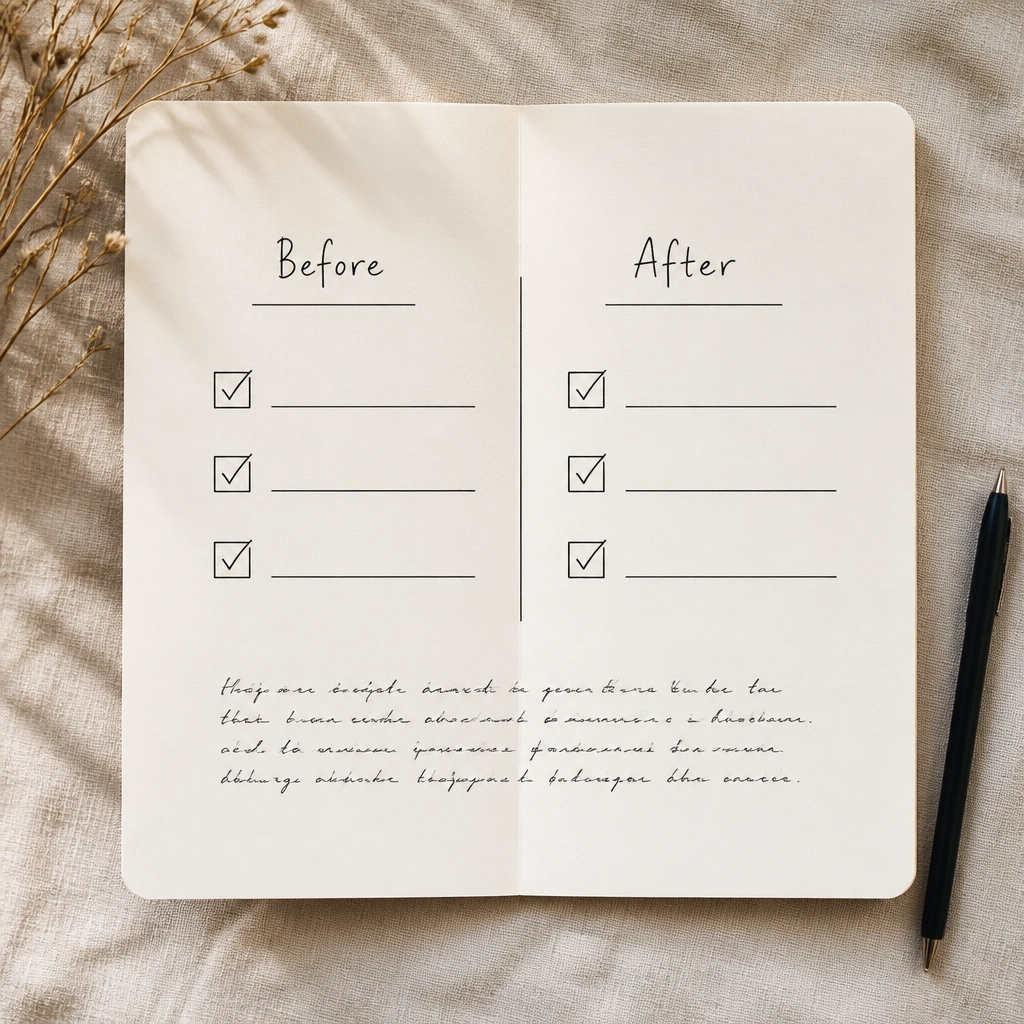
This is a great approach when you don’t know what to write in an empty diary because it gives you structure. Write 3 checkboxes for what was hard or messy (before) and 3 checkboxes for what helped (after). Then add one 4-sentence micro-story: what happened, what you tried, what changed, and what you learned. The split layout keeps the page visually balanced.
Choose the same checkbox symbol (like a tiny circle) for both columns to keep it aesthetic.
7. Daily Weather + One Sensory Detail
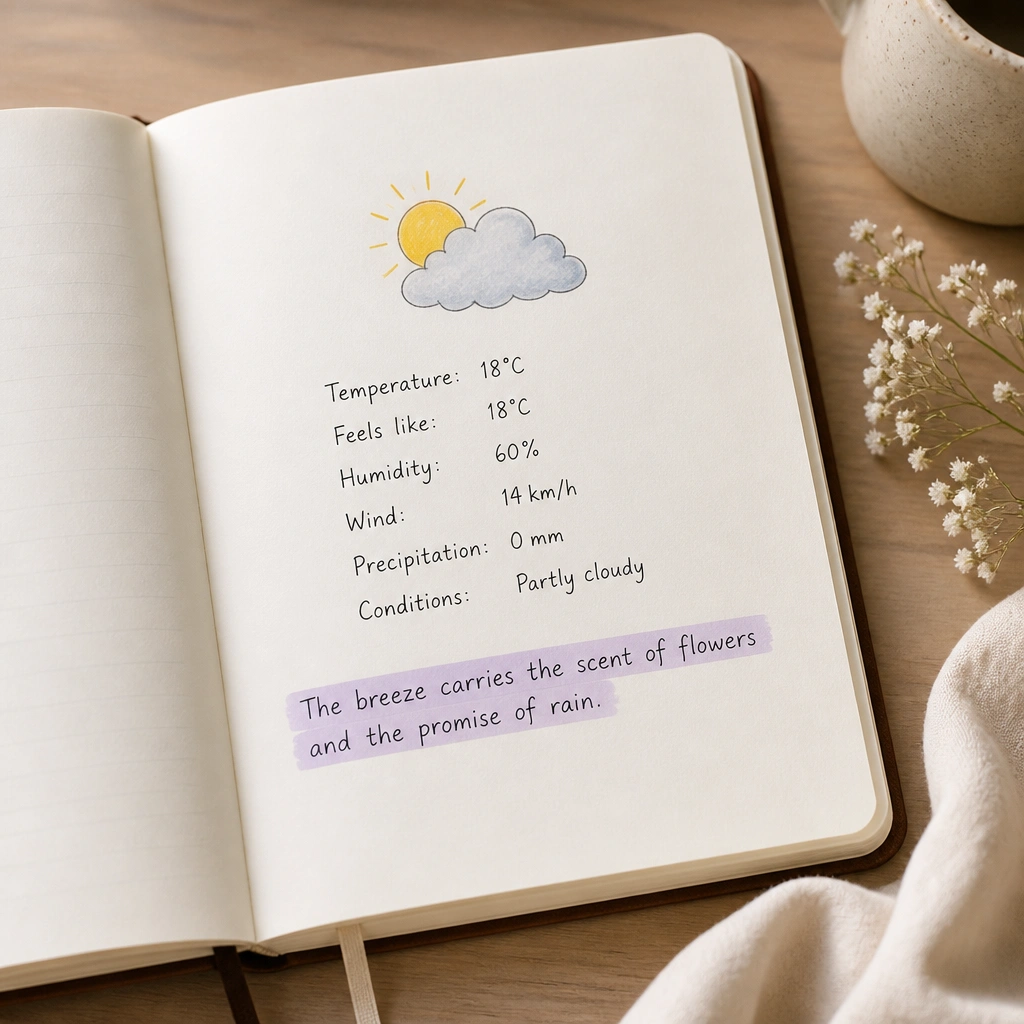
Write the date, then draw a simple weather icon. Under it, add one line of factual weather (like 'warm breeze, overcast by 3pm') and one line that’s purely sensory (smell, sound, texture). Finish with 2 short sentences: what you did because of the weather and what you want to do next time it’s similar. It’s quick, and it always looks pretty because it’s consistent.
Use one highlighter color for the sensory line only — it makes your page feel like a highlight reel.
8. Dream Board Entry (Tiny Symbols + Meaning)
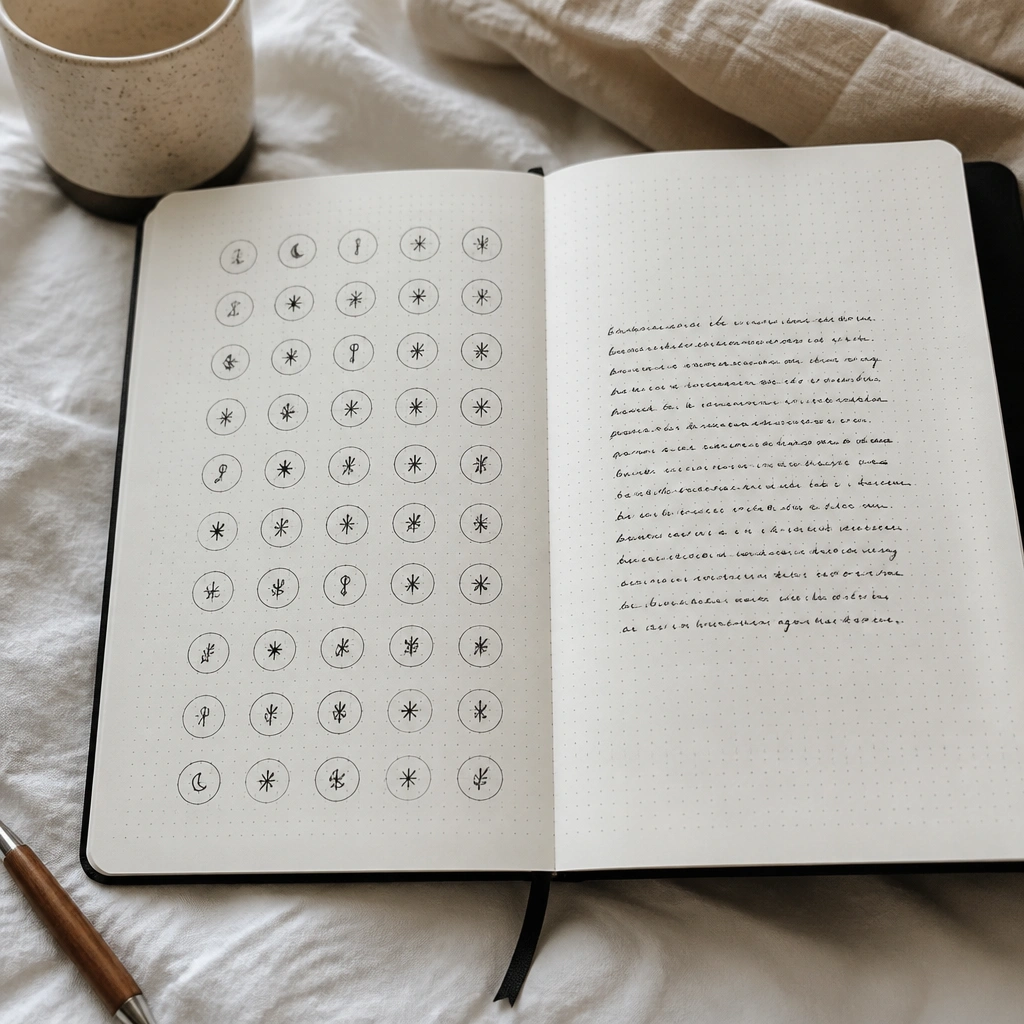
Draw a 3x3 grid of circles and fill each circle with a symbol that matches a theme you want (rest, growth, creativity, love, courage). Write one sentence beside the grid explaining what each symbol means to you right now. This turns “empty diary” anxiety into an aesthetic dream board that’s still personal and useful.
Good to knowPick 3 symbols for the week and keep reusing them — your diary will start to feel like a consistent series.
9. Hand-Drawn Title Header + Lined Entry
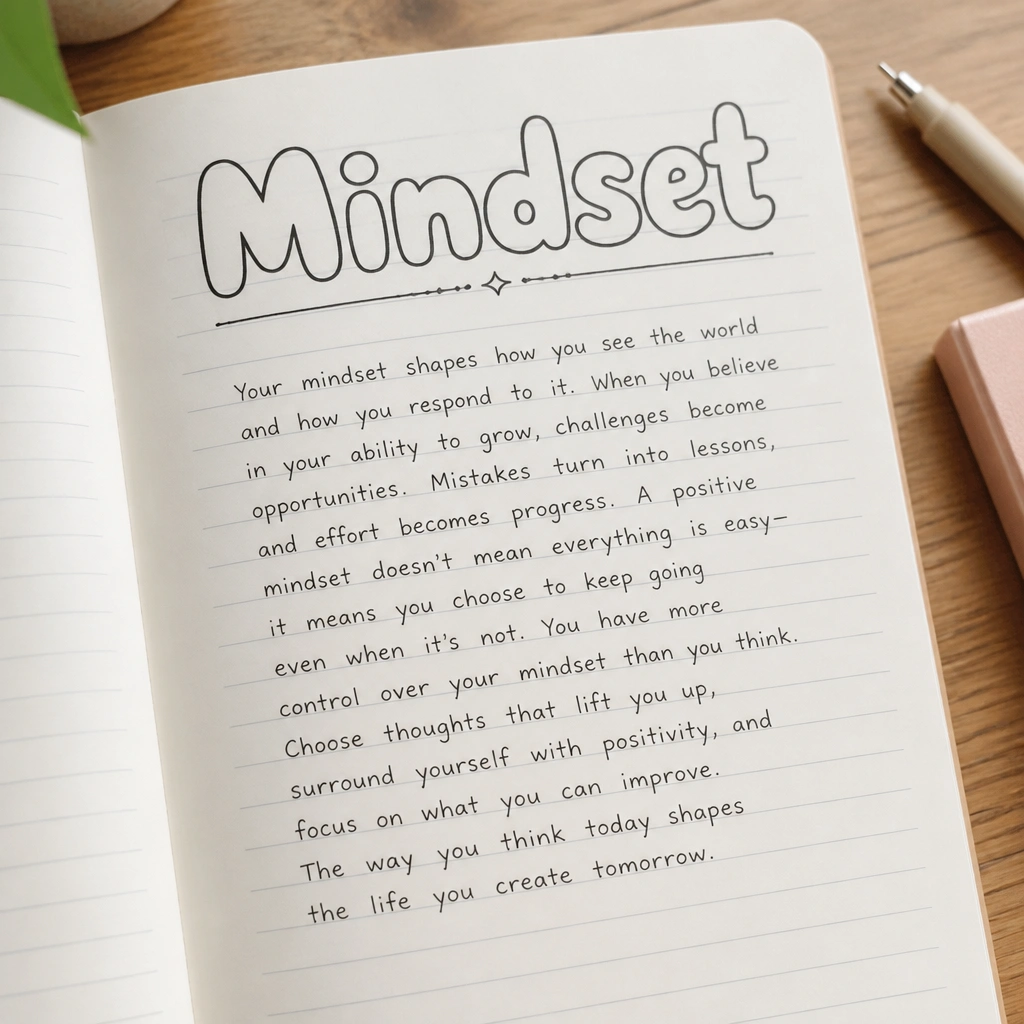
When your page is blank, the fastest aesthetic fix is a strong title. Choose a theme like 'Today’s Soft Moments' or 'Things I Learned'. Hand-letter the title in two colors (one for outline, one for fill), then write your entry in tidy lines below. Keep it to 6-10 sentences maximum so it doesn’t feel like a chore.
Practice the title once on scrap paper — then copy it carefully to the diary page for a clean finish.
10. Recipe-Style “Day Format” Notes
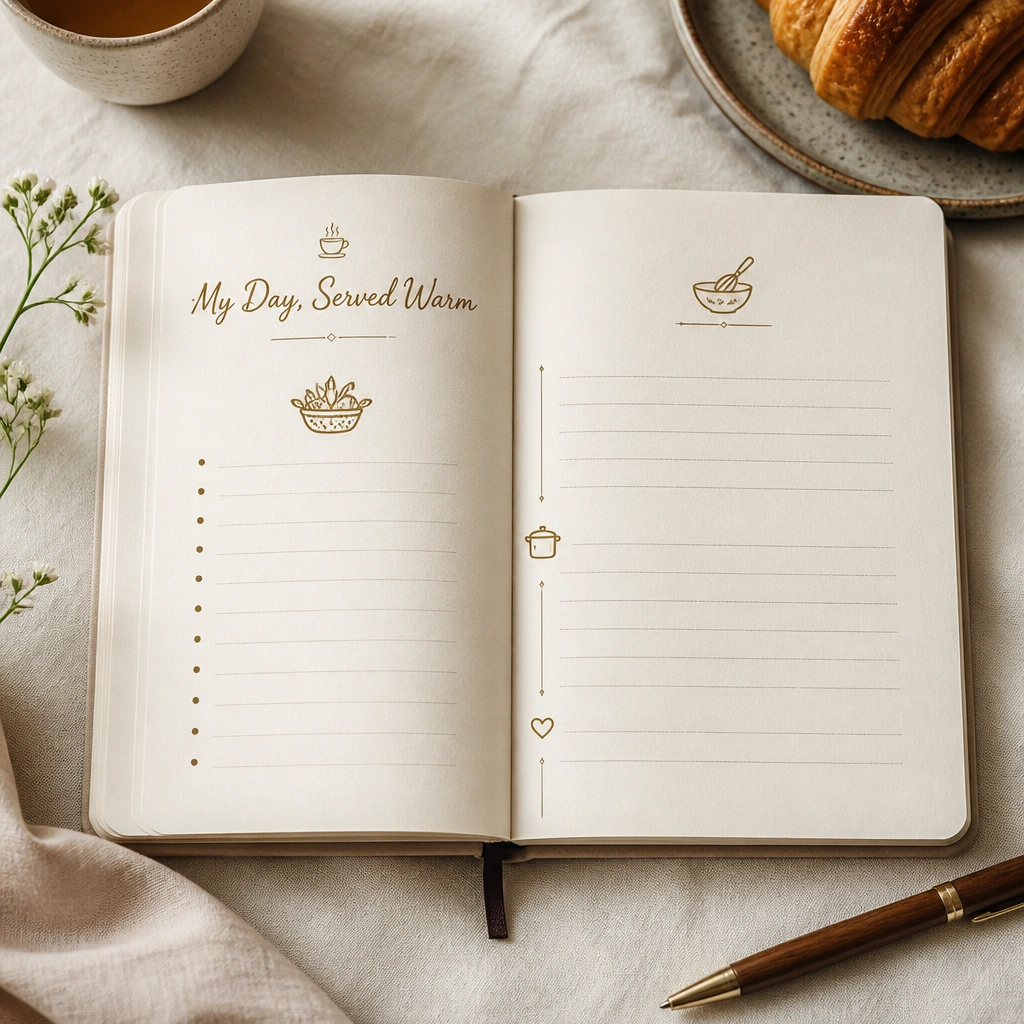
Write your day like a recipe: Ingredients are your basics (coffee, music, sunlight, a task). Instructions are what you did and how you did it. Finish with a 'Serving suggestion' line about how you want tomorrow to feel. This is unexpectedly fun for what to write in an empty diary because it turns journaling into a creative format.
Use 3 ingredient bullets and 3 instruction lines — it keeps the page balanced and fast to complete.
11. Ticket Stub Keepsake + Micro-Story
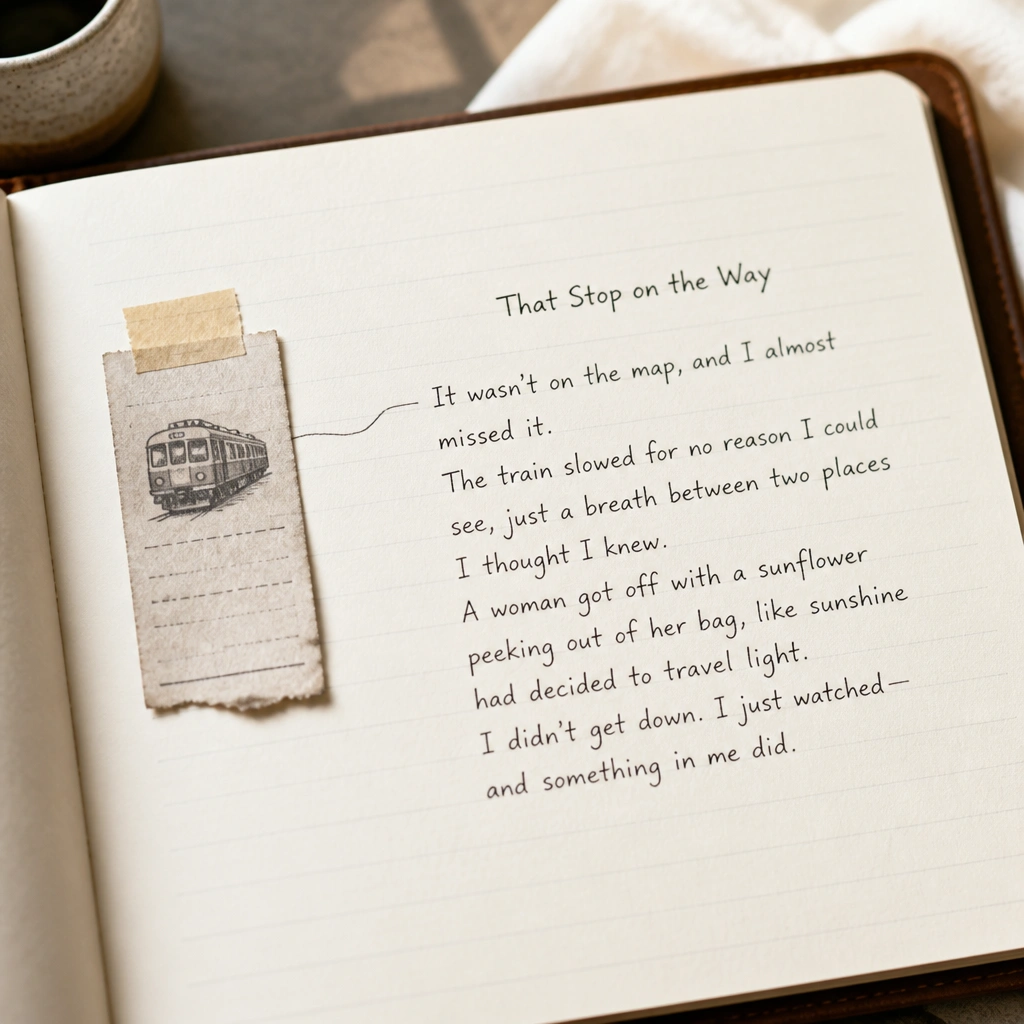
Save a small real-world piece (a bus ticket, a cinema stub, a receipt strip). Tape it to the margin like a bookmark artifact. Then write a micro-story: where you were going, what surprised you, and one detail you want to remember. The physical keepsake anchors your story and makes the entry feel special even if it’s only 5 sentences.
Good to knowTrim the edges neatly with scissors before taping so it looks crisp and intentional.